Last updated November 22, 2026
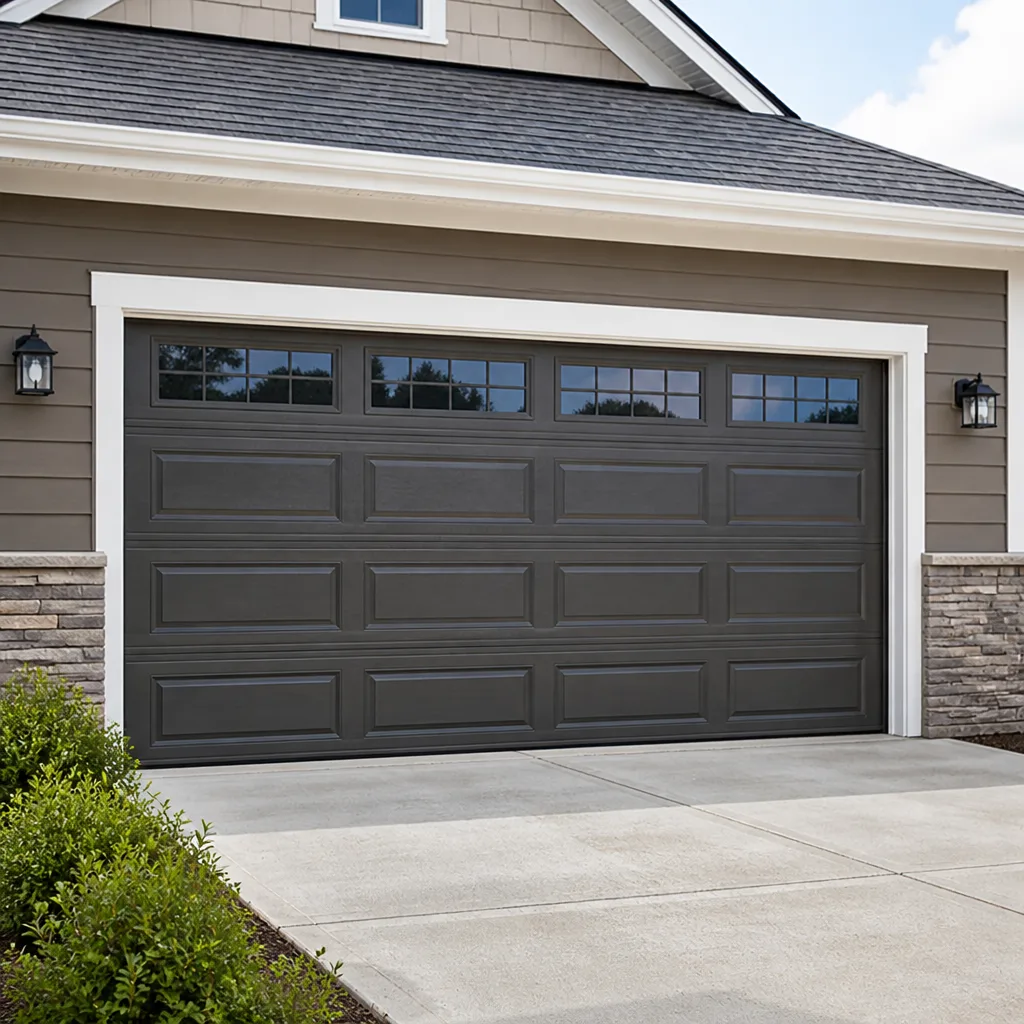 Raised-panel steel
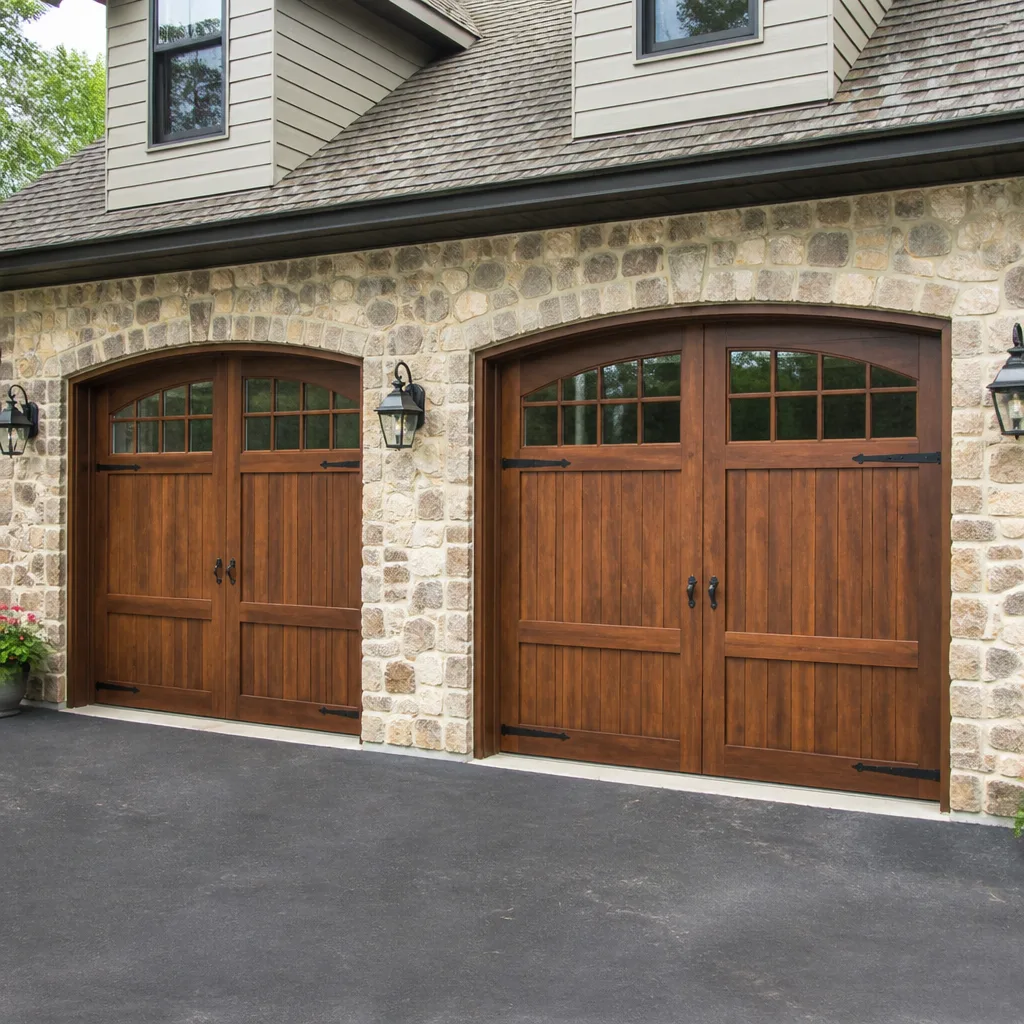 Carriage house
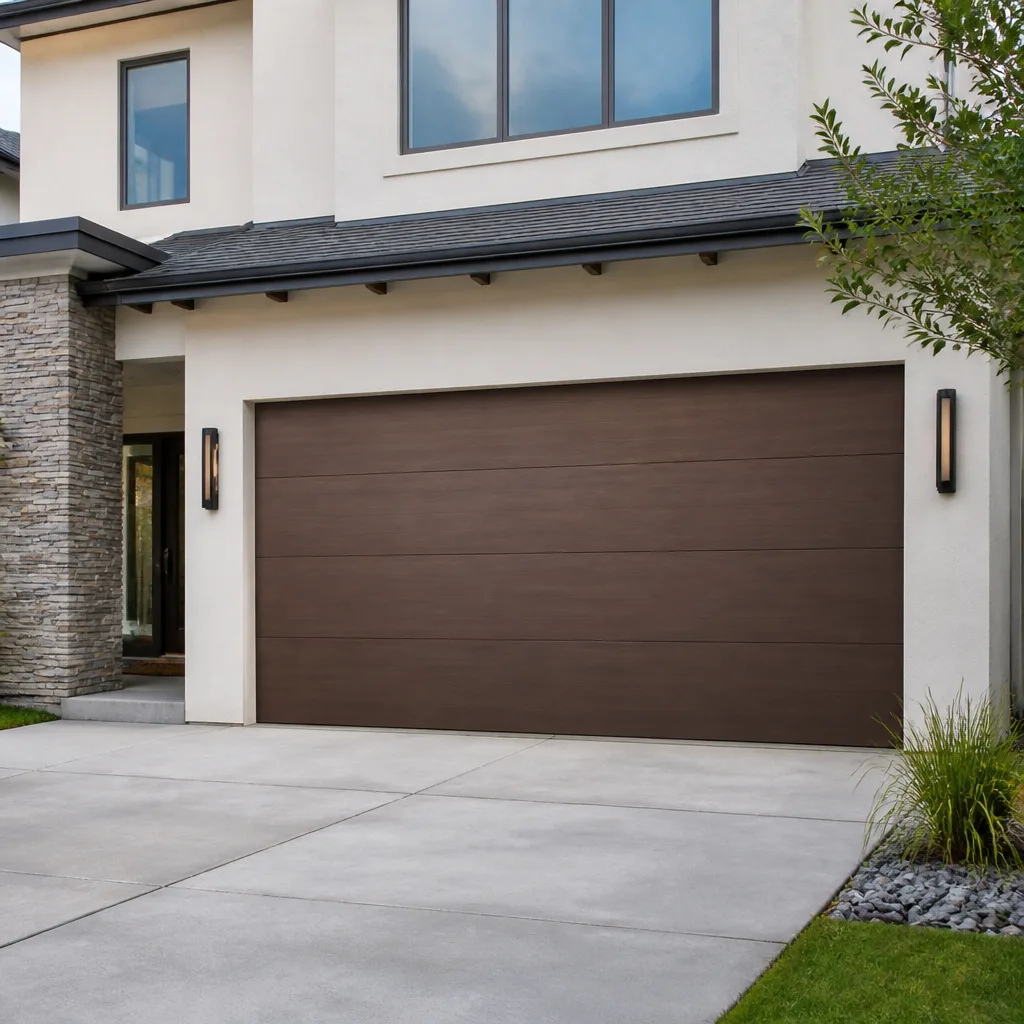 Modern flush
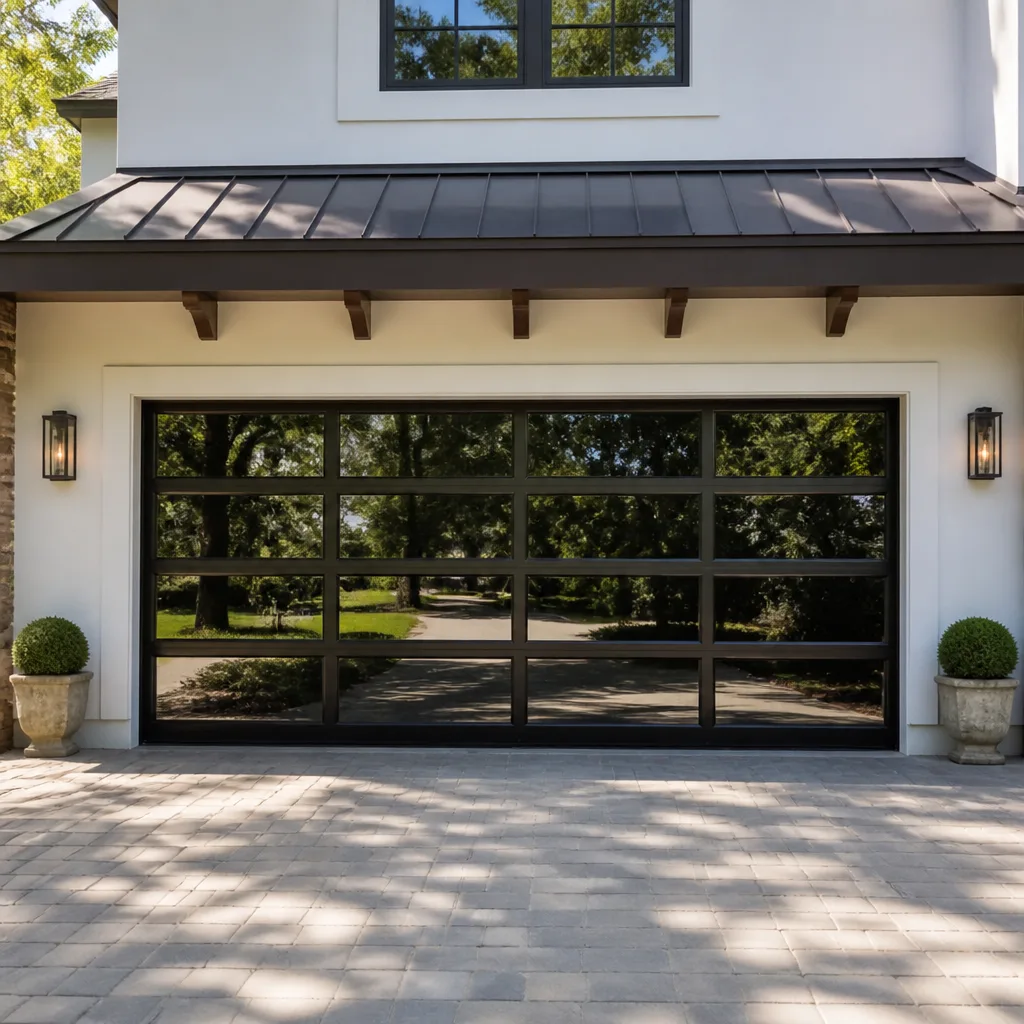 Full-view glass
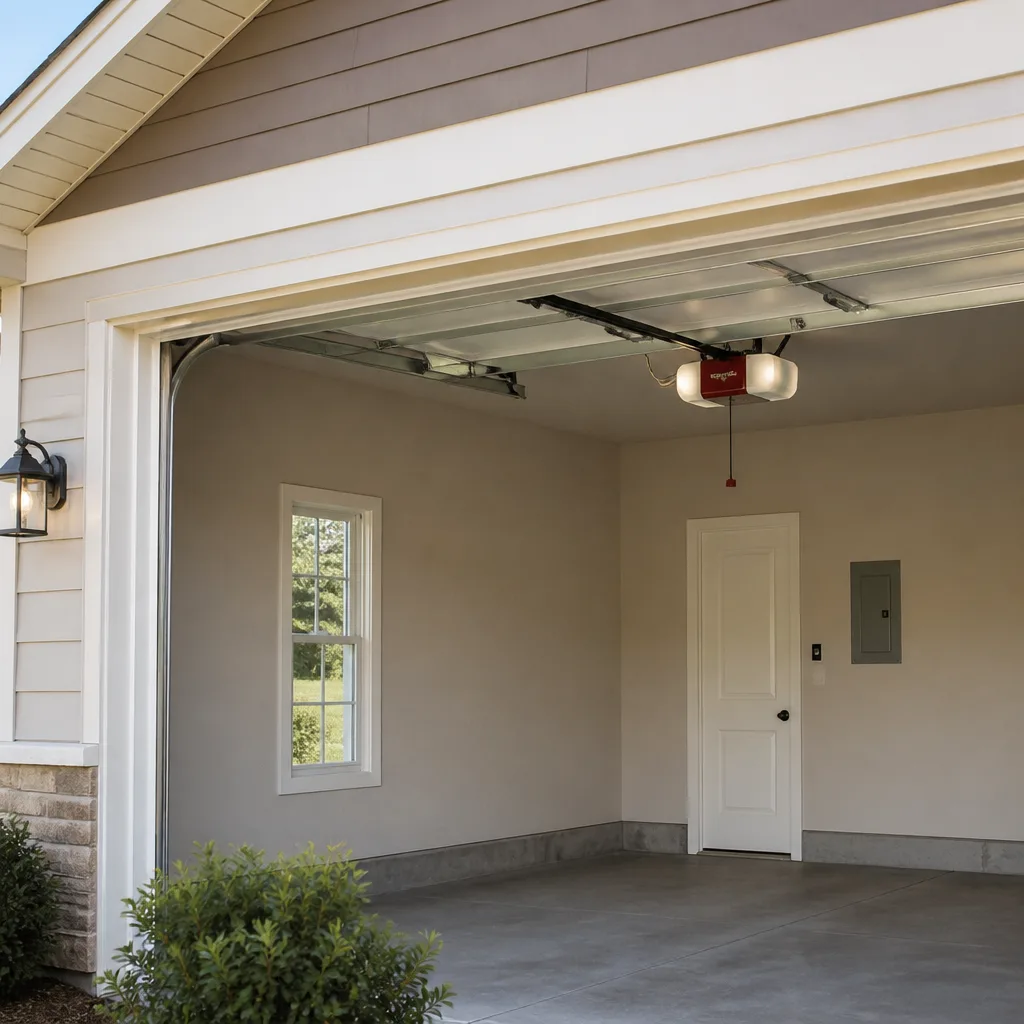 LiftMaster openers
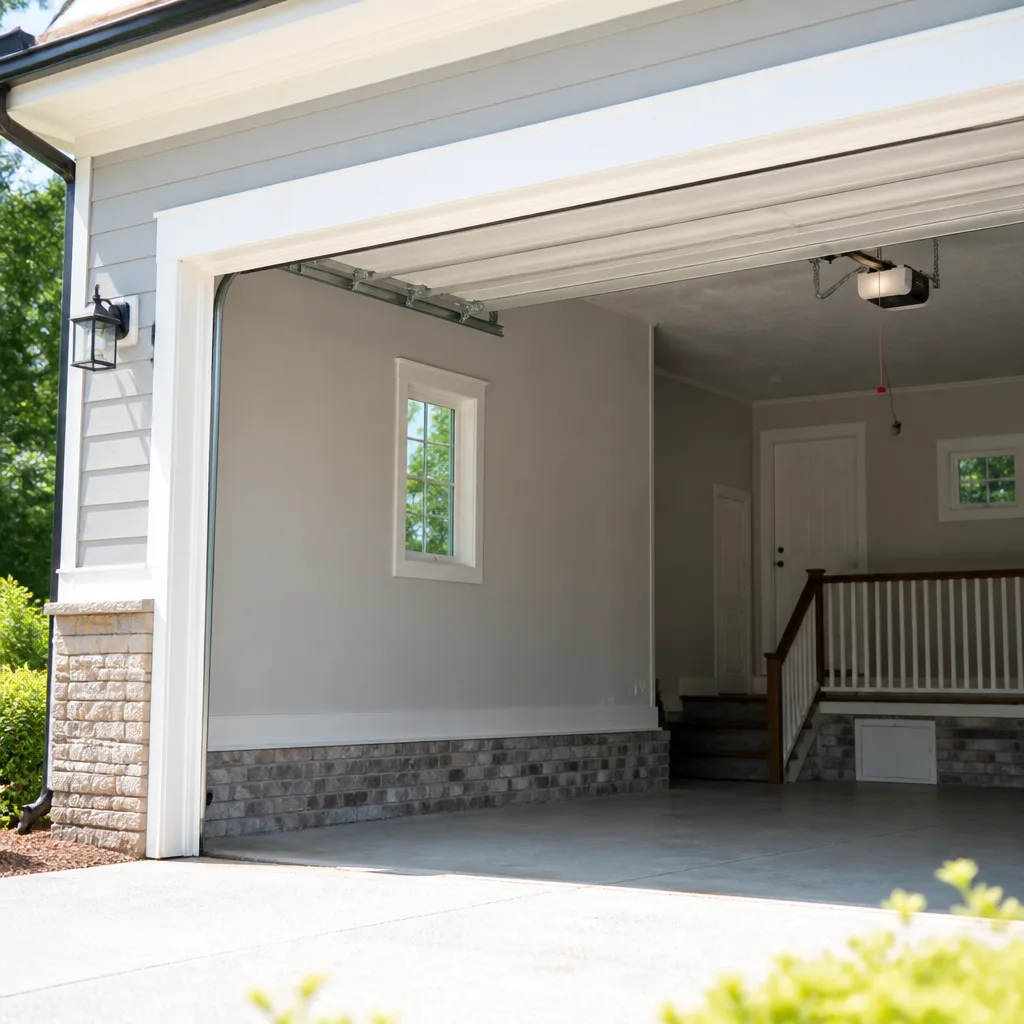 Chamberlain openers
Full 25-point door and opener safety check with every visit - springs, cables, rollers, tracks, and your LiftMaster or Chamberlain opener included
You get a price before we start. It does not change when the pro arrives.
Get your free estimateGarage Door Emergency Preparedness Guide for Chesapeake Homes
Most garage door emergencies aren’t actually emergencies. They’re surprises. A spring snaps at 6 a.m. on a workday, the door comes down crooked, the car is trapped inside, and the homeowner is standing in the driveway in slippers trying to figure out whether to force the door up by hand. The households that handle this calmly aren’t luckier or more mechanically inclined. They simply decided a few things in advance: how to release the door safely, who to call, what to tell that person, and what to do in the minutes before help arrives. That’s the whole game. This guide walks through all four decisions for a Chesapeake home, from post-storm track damage to a frozen bottom seal that feels like a broken mechanism but isn’t. Read it once, do the ten-minute prep at the end, and a bad morning stays a bad morning instead of turning into a bad week.
Quick Answer
Garage door emergency preparedness in Chesapeake means four decisions made in advance: know where your manual release cord is and when not to pull it, save a garage door specialist’s number to your phone, keep a short list of door details ready for that call, and know the safe way to secure a door that won’t close. Do those four things before anything fails and an emergency becomes a scheduled repair instead of a scramble.
Styles & brands we work with
- Raised-panel steel
- Carriage house
- Modern flush
- Full-view glass
- LiftMaster openers
- Chamberlain openers
Table of Contents
- Why a Garage Door Failure Feels Bigger Than It Is
- How Do You Use the Manual Release Safely?
- When Should You NOT Pull the Manual Release?
- How Do You Secure a Door That Won’t Close?
- What Should You Have Ready When You Call?
- Chesapeake Emergency Scenarios You’ll Actually Face
- What Happens During a Power Outage?
- The Pre-Failure Checklist: Do This Today
Why a Garage Door Failure Feels Bigger Than It Is
A garage door is the one machine in a house that does three jobs at once. It’s the biggest moving object on the property, it’s the main vehicle entry, and on many Chesapeake homes it’s the entry people actually use every day. So when it stops working, three things stop at the same time: the car, the tools and gear stored inside, and the normal way in and out. That overlap is why a snapped spring at dawn feels like a crisis rather than a repair.
It helps to know how the door is put together, because it tells you which failures are urgent and which can wait for a scheduled visit.
- Torsion springs mount on a shaft above the door and do the heavy lifting. When one breaks, the door becomes extremely heavy and usually won’t open more than a few inches by hand.
- Extension springs run along the horizontal tracks on either side. A failure here can send the door down hard and is one of the loudest failures homeowners ever report.
- Cables run from the springs to the bottom corners of the door. A cable that jumps a drum or snaps lets one side of the door drop.
- Rollers, hinges and tracks guide the door and take the daily wear. A bent track or a seized roller is a nuisance, not a danger.
- The opener only pulls the door along. It does not lift it. When the springs fail, the opener is trying to lift a door that weighs far more than it’s rated for.
That last point explains most of the confusion. Homeowners press the remote, hear the motor run, watch the door creep up a few inches, and conclude the opener is broken. Almost always, the opener is fine and the springs aren’t. In our experience working on Chesapeake doors, that misdiagnosis is the single most common reason people call the wrong trade first.
One more framing note: a garage door failure is rarely a security disaster on its own, but a door stuck open overnight does leave the house exposed. That’s the reason to secure it properly rather than just leave it where it sits.
How Do You Use the Manual Release Safely?
The manual release lets you disconnect the door from the opener so you can lift it by hand. Every opener has one, and almost nobody has ever looked at theirs. The release is a cord, usually red, hanging from the trolley that rides on the rail above the door. Learn its exact location before you need it.
The procedure differs slightly by opener type. Here’s how the three most common setups work.
- Chain-drive and belt-drive openers (LiftMaster, Chamberlain, Genie, Craftsman): Stand inside the garage, at the door. Close the door fully first if it will close. Pull the release cord down and toward the opener at a slight angle until the trolley clicks free. Then lift the door by hand, using the bottom section, with your body clear of the door’s path. If the door feels heavy or won’t stay up, stop and let it back down.
- Screw-drive openers: Same motion, but the cord often sits closer to the opener body. Pull straight down, not sideways, because a sideways yank can bind the trolley against the rail. Confirm the click before lifting.
- Jackshaft openers (side-mounted, common on high-lift and torsion setups): These usually have a release mechanism on the opener itself rather than a hanging cord. Look for a lever or a cord on the side unit. Some models require the door to be in a specific position before the release will engage; test this.
Re-engaging is the part people forget. Most openers reconnect automatically the next time the motor cycles: press the wall button once and the trolley will catch the carriage as the door passes it. If it doesn’t catch, run the opener once more with the door in the fully closed position.
A few safety rules that apply to every type:
- Never stand under a door you’ve just disconnected. A door held up only by a disconnected spring system can drop without warning.
- If the door won’t stay up after you release it, it’s not a manual-release problem. It’s a spring problem. Leave it down and call.
- Never let anyone, especially a child, hold a disconnected door open with their body weight so someone can drive out. That’s how serious injuries happen.
- If your release cord is frayed, knotted, or missing the handle, replace it before you rely on it. A cord that snaps when you pull it leaves you with a disconnected door and no way to manage it.
If the door still runs rough or reverses after you’ve reconnected it, have an opener technician look at it; our garage door opener repair team deals with this constantly.
When Should You NOT Pull the Manual Release?
Don’t pull the manual release if a spring is broken, a cable has snapped, or the door is hanging off one track. In those cases, releasing the door disconnects the only thing holding it, and the door can come down fast and hard. This is the single most important rule in this guide.
Here’s the distinction that matters. The manual release is a convenience feature for when the opener fails but the door’s mechanical system is intact. It’s a hazard when the door’s mechanical system is what failed.
Ask three questions before you pull:
- Is the door already off-balance? Lift it about a foot by hand with the opener engaged. If it feels much heavier on one side, or won’t hold position, the springs or cables aren’t doing their job. Don’t release it.
- Is there visible damage? A gap in a spring coil, a cable trailing off a drum, a bent track, a door section that sits crooked in the opening. Any of these means stop.
- Did anything make a loud noise when it failed? A bang or pop usually means a spring let go. Don’t pull the release.
If all three are clear and the door moves smoothly by hand, the manual release is safe to use. If any one of them is a problem, leave the door closed and call a specialist. High-tension springs and cables store enormous energy, and the components can fail without warning. That’s why spring and cable work belongs with trained technicians using proper tools, not with a homeowner and a pair of vice grips. Our garage door repair service exists for exactly this moment.
How Do You Secure a Door That Won’t Close?
If the door won’t close after a spring or cable failure, the safest temporary move is usually to leave it where it is and secure the opening from the inside, not to force the door down. Forcing a door with a broken spring can bend panels, twist tracks, and turn a spring repair into a full door replacement.
Here’s what actually works, roughly in order of preference:
- Push the door down by hand and hold it in the closed position. With two people, one on each side, walk the door down slowly and evenly. If it stays down, you’re done. If it lifts back up on its own, the balance system is gone. Stop and use one of the options below.
- Clamp the tracks above the top roller. A pair of locking pliers clamped on each vertical track, just above the top roller, prevents the door from lifting. This is a temporary measure only. Make sure nobody runs the opener while the clamps are on.
- Barricade and back-secure the opening. If the door can’t be brought down at all, secure the house from the inside by locking the interior door or doors that connect to the garage, and move anything valuable out of the garage. A door left partially open in a Chesapeake neighborhood is an invitation, and treating it that way isn’t paranoia.
- Post a paper sign on the door’s interior. Something as simple as “DO NOT OPERATE – BROKEN SPRING” prevents a family member from pressing the wall button out of habit and making the situation worse.
What doesn’t work: wedging a brick or a block of wood under the door to hold it, propping the door with a broom handle, tying the door’s bottom bracket to the track with rope, or driving the car out and back in under a partially open door. That last one accounts for more damaged panels than any storm. A temporary fix that damages the door just adds cost to a repair that was already due.
Once the door is secured and you’ve called for help, leave it alone. The technician needs to see the door’s condition as it failed to diagnose it correctly.
What Should You Have Ready When You Call?
Have four things ready when you call for emergency service: your door’s width and height, the opener’s brand and model, a description of the spring setup, and what you heard or saw at the moment of failure. With those in hand, a technician can often carry the right parts on the first visit.
Here’s the specific list, and why each item matters.
- Door width and height. A single-car door is typically around 8 to 9 feet wide, a double-car door 16 feet, and height usually runs 7 to 8 feet. Measure it if you can. Width and height determine spring size, and spring sizing is what keeps a technician from making two trips.
- Opener brand and model. Look at the unit above the door. The brand is printed on the housing, and the model number is on a sticker, often on the back panel. If your opener is a LiftMaster, Chamberlain, Genie, or Craftsman, we’re familiar with its quirks, adjustments, and common failure points.
- Spring type. Is it a single torsion spring on a shaft above the door, a pair of torsion springs, or extension springs along the sides? A photo of the spring assembly helps more than a description. If a spring is visibly broken, say so; that changes what the technician brings.
- What happened. Did you hear a bang? Did the door come down crooked? Did it close and then fail to open? Is anything hanging or off its track? The description narrows the diagnosis before the truck leaves.
Also have your address, gate or entry instructions, and a callback number ready. If the car is trapped inside, say so; it changes the priority. If you’re calling for a door that’s stuck open, mention that too, since a door left open overnight raises different concerns than one stuck closed.
One shortcut worth taking now: save a garage door specialist’s number in your phone under a name you’ll actually find, like “Garage Door Help.” Chesapeake Garage Door Repair Pros is reachable at (866) 834-6826. Add it before you need it, because when your hands are full and the door is half down, nobody thinks to search.
Chesapeake Emergency Scenarios You’ll Actually Face
Most garage door emergencies in Chesapeake fall into a handful of patterns, and knowing which one you’re dealing with helps you respond correctly. Here are the four we see most often.
Post-storm track damage. After a heavy storm or a wind event, debris can land on the door or a limb can strike a panel. What you’ll notice: the door runs unevenly, binds at a certain point, or won’t close fully because one side catches. Don’t force it. A bent track can be straightened in some cases and replaced in others, but every cycle you run on a damaged track risks bending the door’s sections as well. Take a photo before you call and don’t operate the door again until it’s inspected.
Power outages. Chesapeake homes lose power during summer storms like anywhere else, and a garage door won’t open on a dead opener. This is exactly the scenario the manual release was designed for. If the door is mechanically sound and light to lift by hand, follow the release steps above. If it’s heavy or off-balance, don’t; call for help.
Ice-frozen bottom seals. This one fools people every winter. When overnight temperatures drop and the rubber bottom seal freezes to the concrete slab, the door runs a few inches, meets resistance, and reverses. The opener beeps, the door stops, and it feels like a mechanical failure. It usually isn’t. To check: look at the bottom seal before running the door. If the seal is stuck to the floor, free it carefully by hand or with warm water along the seam, never by forcing the opener. Running the opener against a frozen seal repeatedly stresses the opener’s gears and can strip them.
Spring failure in cold snaps. Cold weather is hard on springs, and a spring that’s been cycled thousands of times is more likely to fail on a cold morning than a mild afternoon. If it happens, treat it as a spring failure, not an opener failure: don’t pull the release, don’t run the opener, and call a specialist who handles spring work. A single broken spring or a matched pair is a standard repair.
Whether your brand is Clopay, Amarr, Wayne Dalton, or something older, the failure patterns are remarkably consistent across all of them. The brand matters for parts; the physics of the failure doesn’t change.
What Happens During a Power Outage?
During a power outage, your opener is dead but your door still works manually if its mechanical system is intact. The manual release exists for this. The trick is confirming the door is safe to release before you do it, which means checking balance and springs first, not last.
The step-by-step, for a door that’s mechanically sound:
- Confirm the door is fully closed.
- Locate the release cord on the trolley above the door.
- Pull it down and towel toward the opener until you hear the click.
- Lift the door by hand from the bottom section to test weight. If it’s manageable, open it fully. If it’s not, let it back down.
- With the car out, close the door by hand, and re-engage the trolley when power returns by cycling the opener once.
A few Chesapeake-specific notes on outages. Summer storms can take out power for hours, so the release cord should be reachable without a ladder. If your cord hangs too high to grab comfortably, add a short length of cord or a handle now. Also, don’t leave the door disconnected longer than you need to; a disconnected door is a door anyone can lift from the outside, and an open garage is a security risk even if the door isn’t damaged.
Some openers have a battery backup. If yours does, it will typically raise and lower the door a limited number of times after power fails. That’s enough to get a car in or out, not enough to treat as normal operation. Check your owner’s manual for how the backup behaves with your specific model.
If the opener runs but the door won’t move even with power restored, that’s an opener or coupling problem, not a power problem. That’s a job for an opener specialist, and we can look at it.
The Pre-Failure Checklist: Do This Today
This is the section to act on. Everything above is easier if you’ve done these things in advance. Set a timer for ten minutes and work through it now, not after the next failure.
- Find your manual release cord. Look up. Find the cord on the trolley. Confirm you can reach it from standing height. If not, add a short extension cord or a handle today.
- Check the cord’s condition. Is it frayed, knotted, or missing the handle? Does it pull smoothly, or is it stiff? Replace a bad cord now.
- Test the door’s balance. With the opener engaged and the door closed, lift it about a foot by hand. It should feel manageable and roughly even side to side. If it’s much heavier than expected, have a technician check the springs.
- Confirm a backup entry. If your garage is the main way into the house, make sure you have another way in that doesn’t require the garage. A hidden key, a lockbox, or a key with a trusted neighbor all work. Decide which one and set it up.
- Take a photo of the opener’s label. The sticker with the model number. Save it to your phone. When you call, you’ll read the model instead of explaining and guessing.
- Measure your door. Width and height. Note whether the springs are torsion or extension. Save the note.
- Save a specialist’s number. Add it to your phone now. (866) 834-6826 is a good one to keep.
- Show a family member the release. Whoever else drives in and out of that garage should know where the cord is and when not to pull it.
If the balance test feels off, if you find a cracked spring, a frayed cable, or a bent track while you’re up there, don’t wait. Have a technician assess it. Repairs caught early stay small, and garage doors don’t heal.
Common Mistakes to Avoid
- Forcing a door with a broken spring. Once a spring fails, the door’s weight is no longer supported, and forcing it up or down bends panels and twists tracks. That turns a spring repair into a door replacement, and in a Chesapeake market where replacing one section is rarely easy to match, it can mean a full door.
- Running the opener repeatedly on a problem door. Every cycle on a failed spring or seized roller puts more stress on the opener’s gears and the door’s hardware. A few presses to test is fine. Repeated pressing to “see if it fixes itself” almost always makes it worse.
- Treating an opener issue as a door issue, or the reverse. The most common misdiagnosis is thinking the opener is broken when it’s a spring. The opposite also happens: an opener that’s out of adjustment is blamed on the door. Look at what the door is doing before assuming which part failed.
- Pulling the manual release on an unbalanced door. Covered above, but worth repeating because it’s the most dangerous version of this mistake. A disconnected door held by nothing can drop without a warning sound.
- Using bricks, brooms, or rope to hold a door. These don’t hold. They give way under the door’s weight and can drop a door on hands, feet, or the car. Track clamps or a securely closed door are the only safe temporary options.
- Waiting for the annual spring inspection. There’s no annual garage door inspection in most households, and waiting for one means you find out about a worn spring the hard way. If the door has ever felt heavier than usual, have it looked at.
- Calling a generalist first. A handyman can adjust a limit switch. Spring and cable work isn’t a handyman job, and a general contractor will sub it out. A single-trade garage door specialist is the right call for anything involving the door’s mechanical system.
See the difference
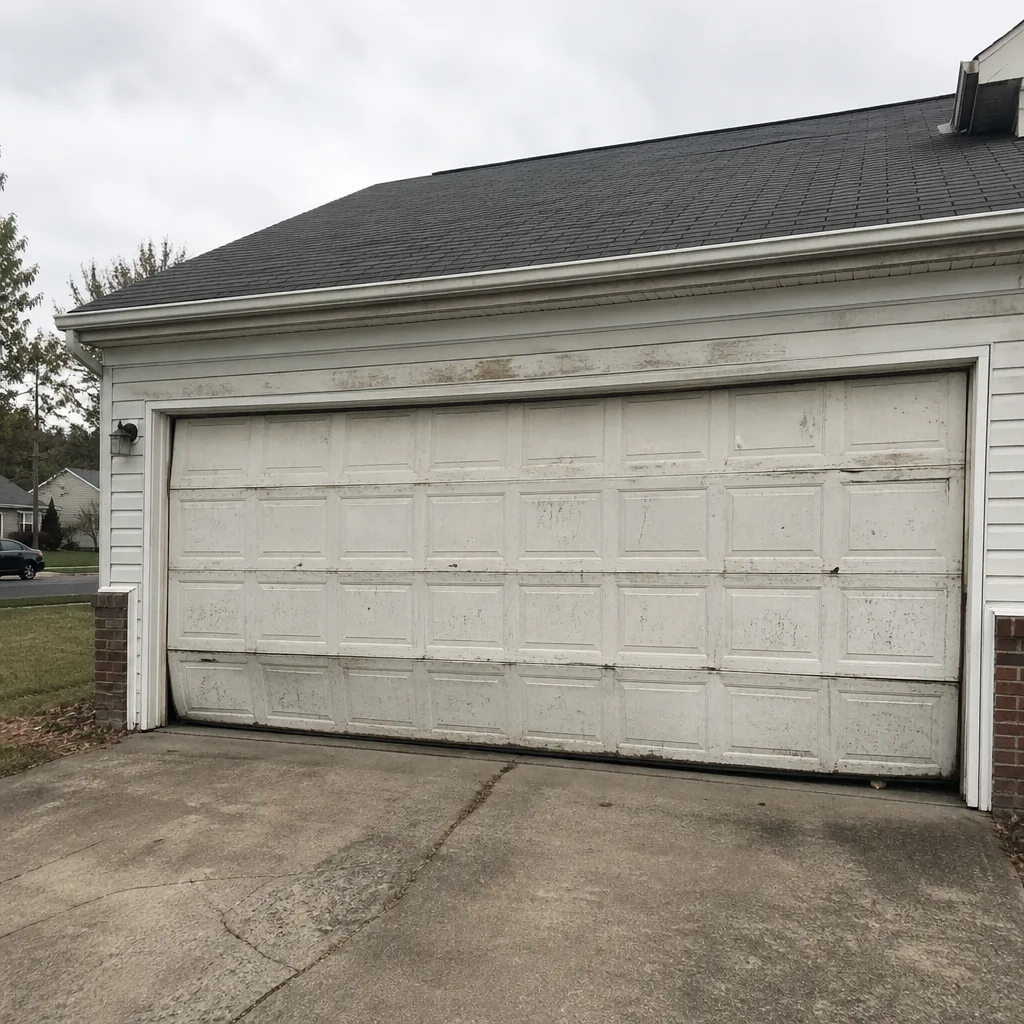 Before
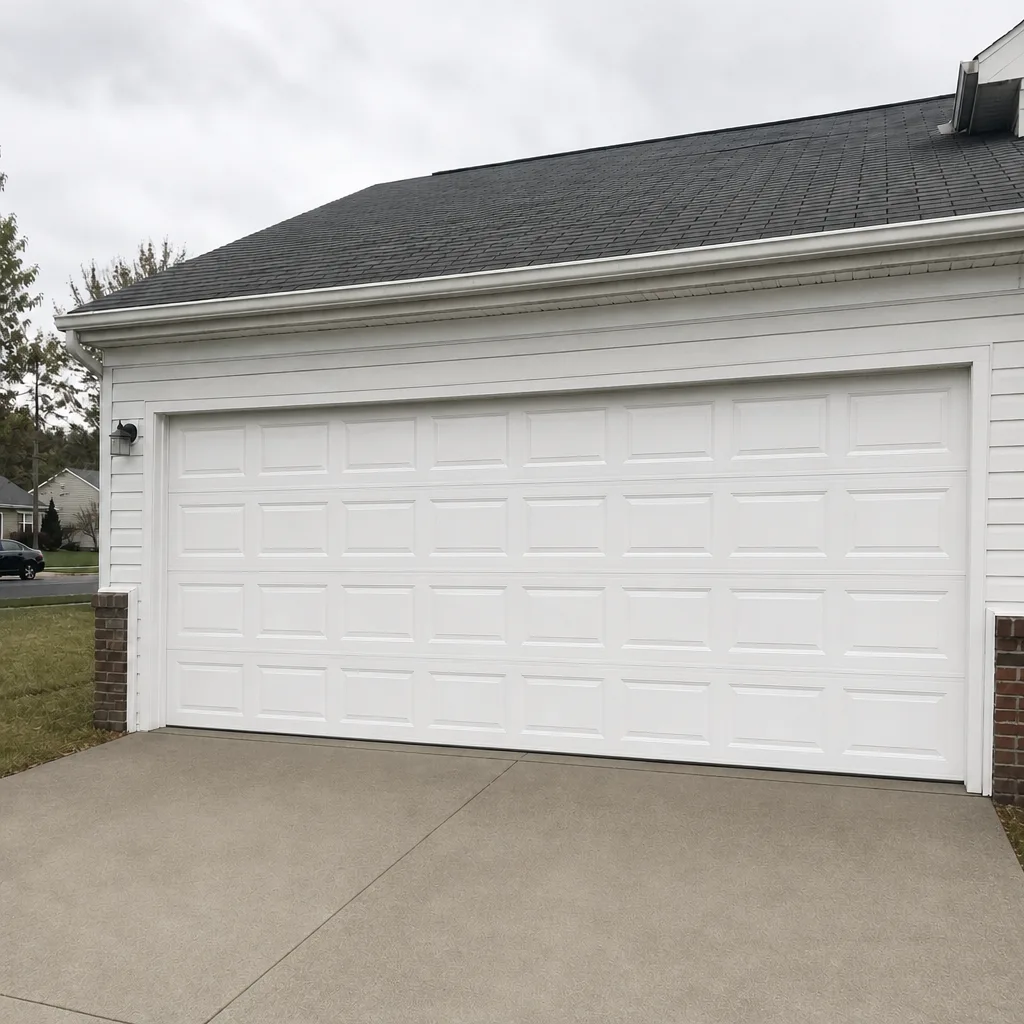 After
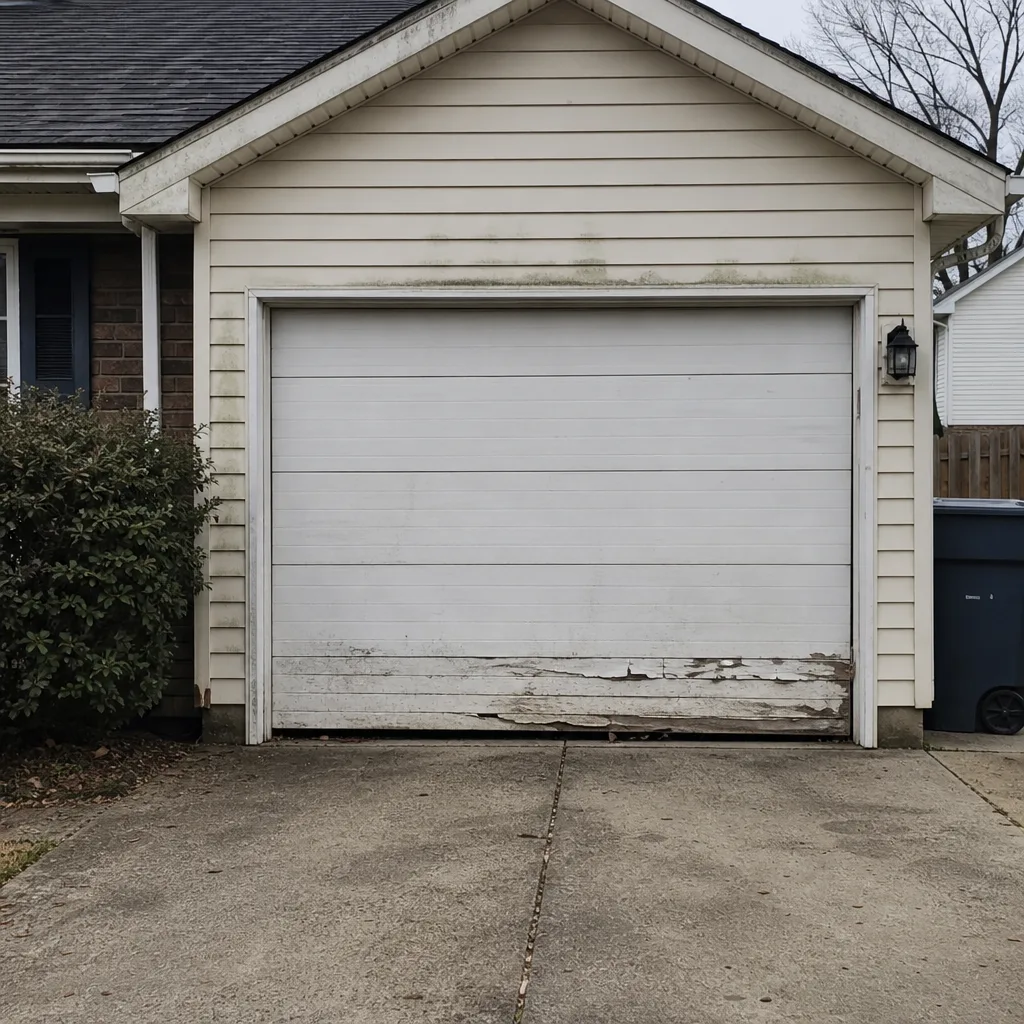 Before
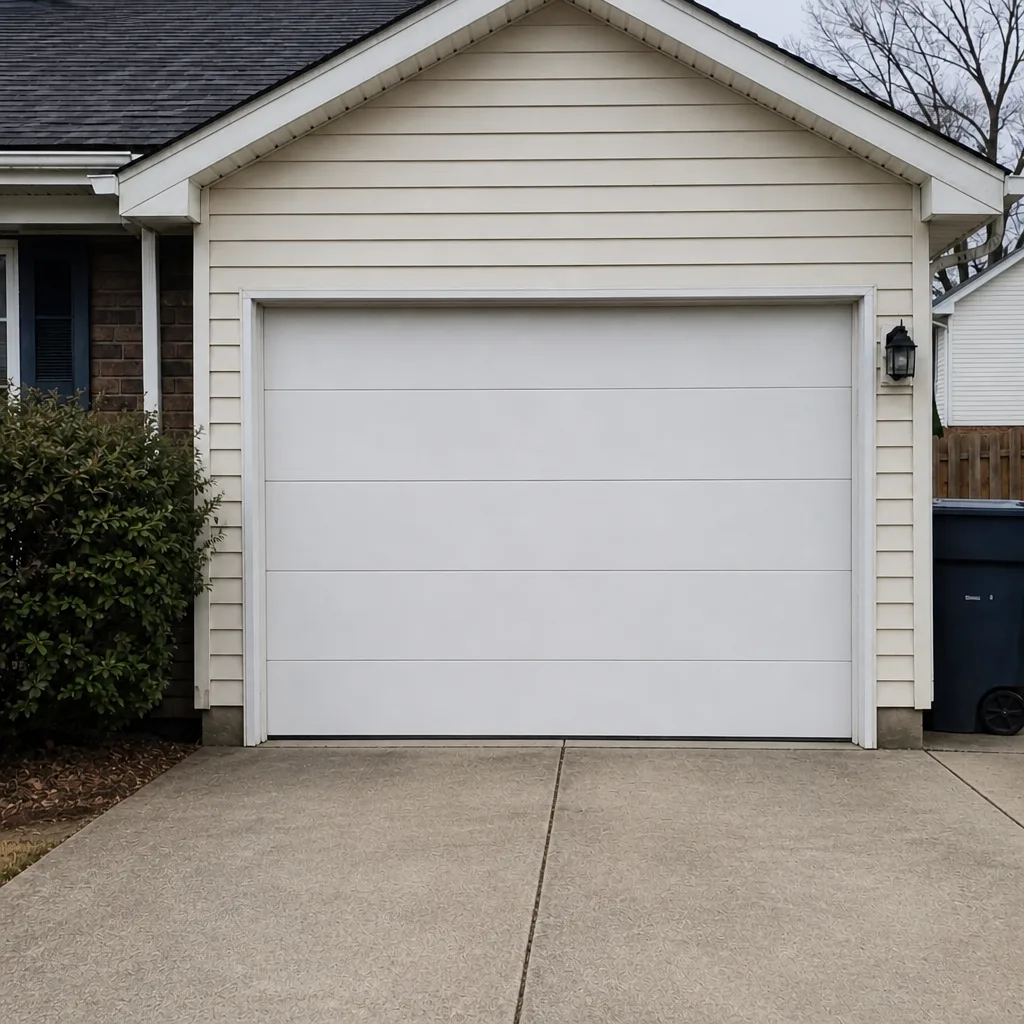 After
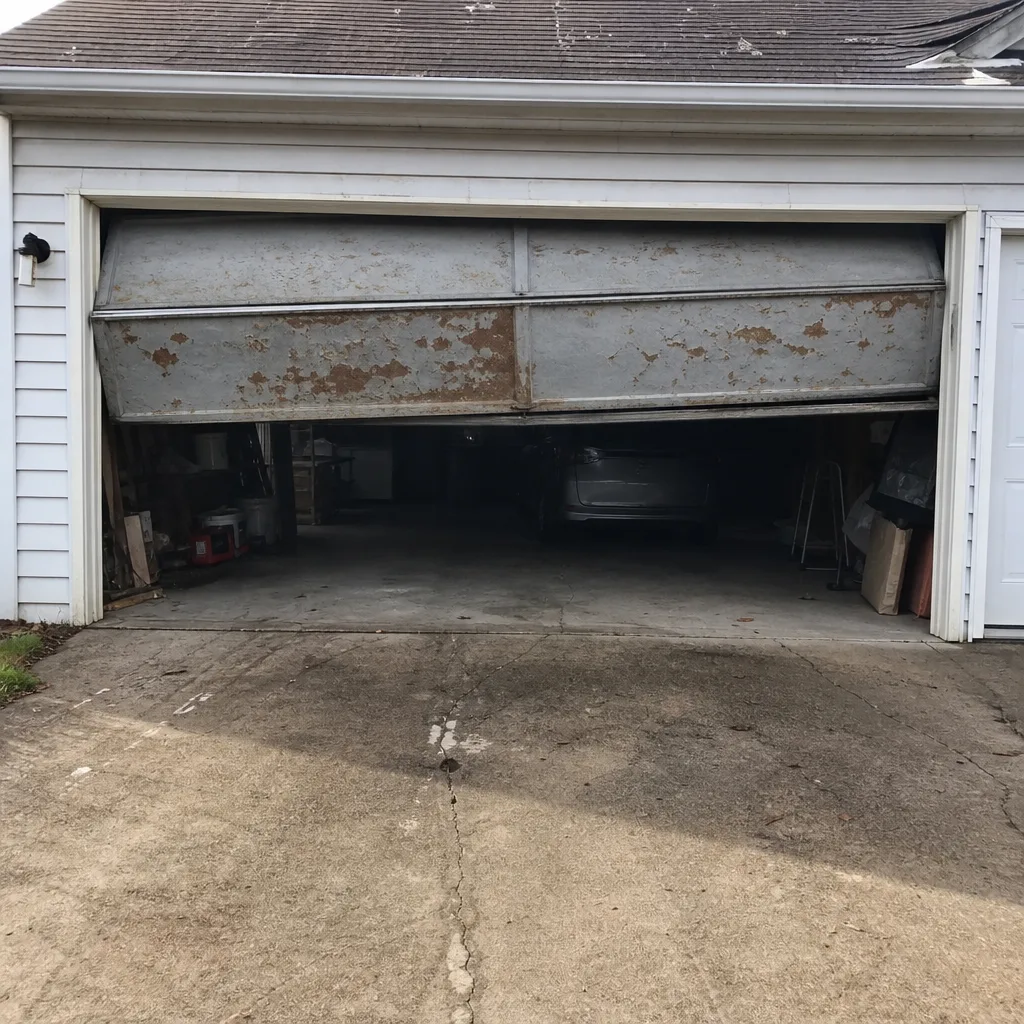 Before
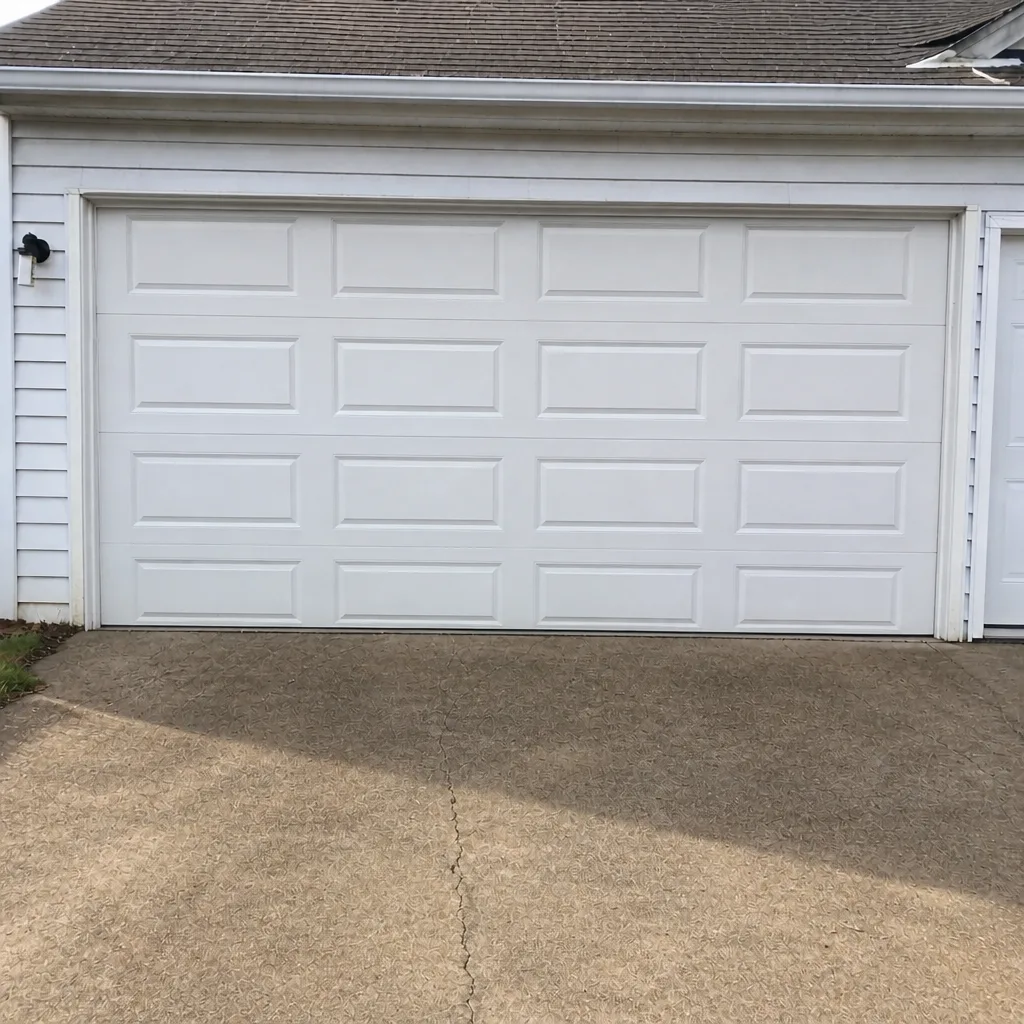 After
When to Call a Professional
Call a professional for anything involving springs, cables, and tracks, and for anything that leaves the door off-balance or partially open. Those are the jobs where the risk of making things worse is real. Specifically: a snapped spring, a cable off its drum, a door hanging crooked, a door that won’t close, an opener that runs but doesn’t move the door, and any door that’s been damaged by impact. Please don’t attempt a spring replacement or a cable rewind yourself. The tension in those components can release without warning, and the risk is serious injury. For these, call a trained technician who works on doors every day. For a door that’s simply slow, noisy, or needing adjustment, an opener specialist can diagnose it without urgency.
Chesapeake Garage Door Repair Pros offers free estimates in Chesapeake, and our technicians have up to 13 years of experience. We’re a single-trade garage door company, which means every call is answered by someone who works on doors, not a generalist who’ll pass it along. From a broken spring to a brand-new door, you don’t need a second company. If you have a door that needs attention, or you’d rather have a specialist look at it before something fails, call (866) 834-6826.
Frequently Asked Questions
Leave the door closed, don’t pull the manual release, and call a garage door specialist. A broken spring means the door’s weight is unsupported, and the manual release is the one thing you should not use. If the door is partially open, secure it from the inside with track clamps or a barricade and keep people clear of it until a technician arrives. Save (866) 834-6826 to your phone now so you’re not searching for a number when it happens.
Yes, if the door’s mechanical system is intact. Pull the manual release cord on the trolley, then lift the door by hand. If it feels heavy or won’t stay up, don’t force it; the springs or cables need attention. Re-engage the trolley by running the opener once when power returns. Test the release before a real outage so you know how it behaves.
Push the door down by hand with two people, one per side, and see if it stays. If it lifts back up, clamp locking pliers on each vertical track above the top roller. Never wedge a brick or prop the door with a broom; those give way. If the door can’t be brought down at all, secure the house from the inside and move valuables out of the garage. Call a specialist before running the opener again.
It usually means the spring has broken and the opener is trying to lift a door far heavier than it’s rated for. That’s an emergency in the sense that the car is trapped, but it’s also the moment to stop pressing the button. Each cycle strains the opener further. Leave it where it stops and call for spring repair.
It doesn’t take extreme cold. When the bottom rubber seal freezes to the concrete slab, the door can bind on the first few inches and reverse, which feels like a mechanical failure. Before calling for repair, check whether the seal is stuck to the floor. If it is, free it by hand or along the seam rather than running the opener against the resistance.
Yes. On many homes, the garage is the main entry, and a failed door can cut off access entirely. Decide now on a backup: a hidden key, a lockbox, or a key with a trusted neighbor. Confirm it works before the door fails, not after. This is the single most overlooked item on the prep checklist.
The Bottom Line
Garage door emergencies are almost always manageable. The difference is preparation. Know where your manual release is and when not to use it. Have a specialist’s number saved. Keep your door’s measurements and opener model ready for the call. Secure a stuck door safely rather than forcing it. Do the ten-minute checklist this week, and a future failure becomes an inconvenience instead of a crisis. In Chesapeake, whether it’s a storm-bent track, a frozen seal, or a spring that lets go on a cold morning, the calm response is the same one that was decided in advance. If anything on your door feels off, or you’d like a specialist to look it over, we’re a phone call away.
If you’re not sure what your door is doing and you’d rather have a specialist take a look, we can help. Whether it’s a repair, an opener that’s acting up, or a replacement when the fix isn’t worth it, our team works on your brand. Reach us at Chesapeake Garage Door Repair Pros by calling (866) 834-6826 for a free estimate. Our technicians are familiar with Genie, Clopay, Amarr, Wayne Dalton, and other major brands, and we’ll quote and agree the price before any work starts.
Written by the team at Chesapeake Garage Door Repair Pros.