Last updated November 22, 2026
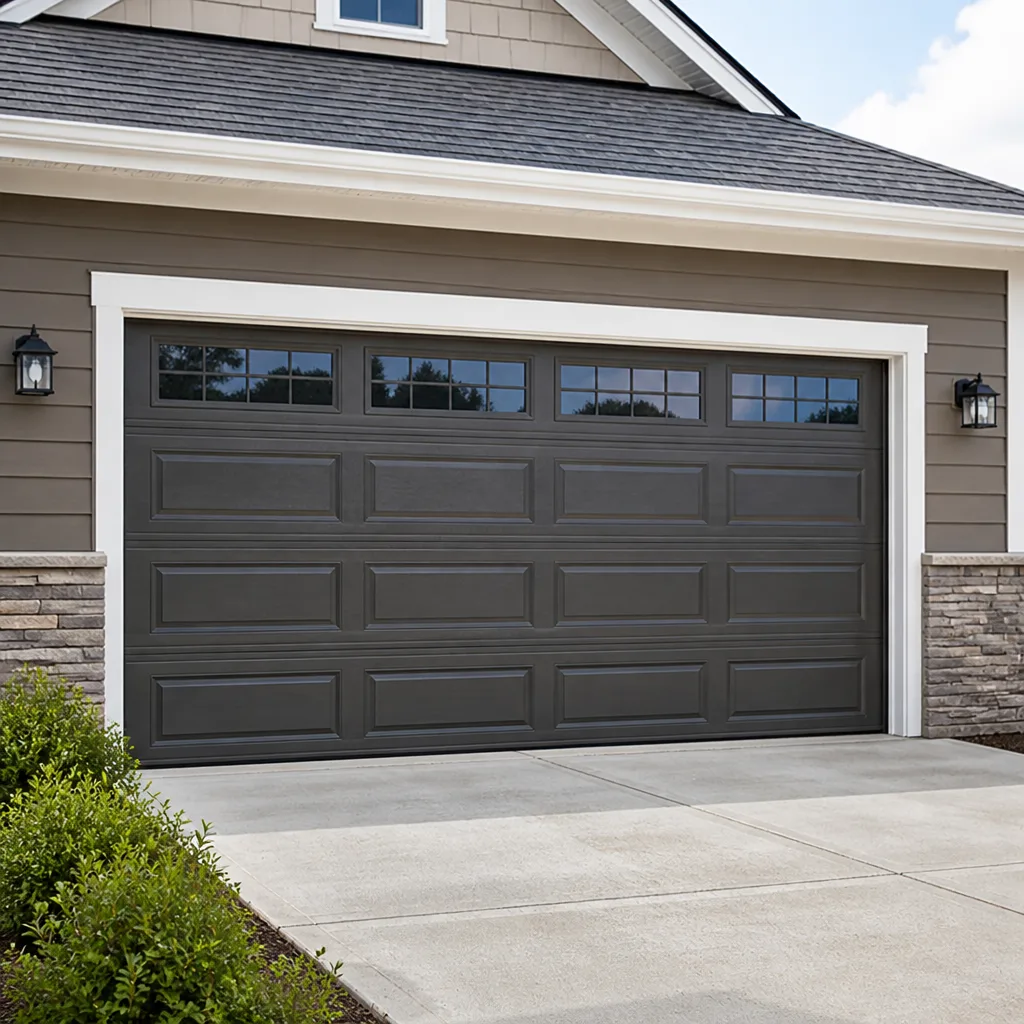 Raised-panel steel
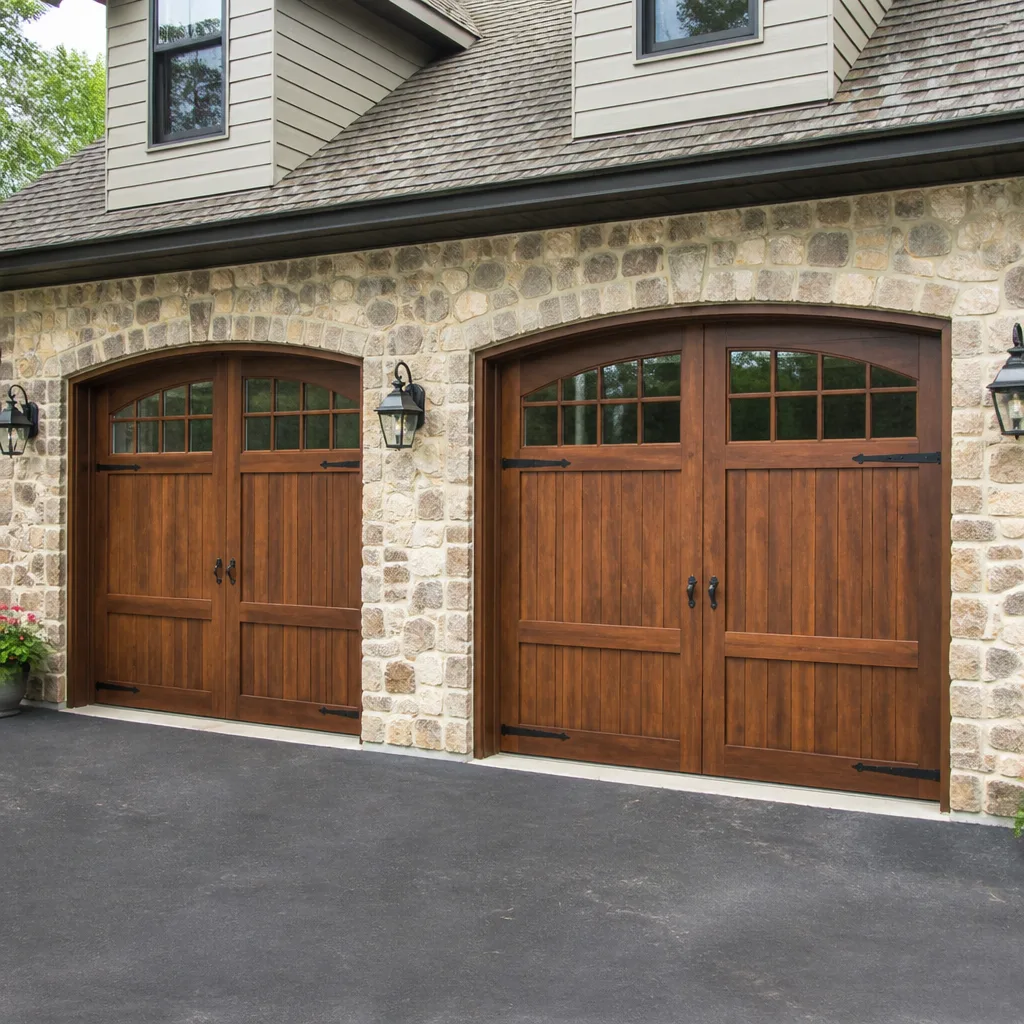 Carriage house
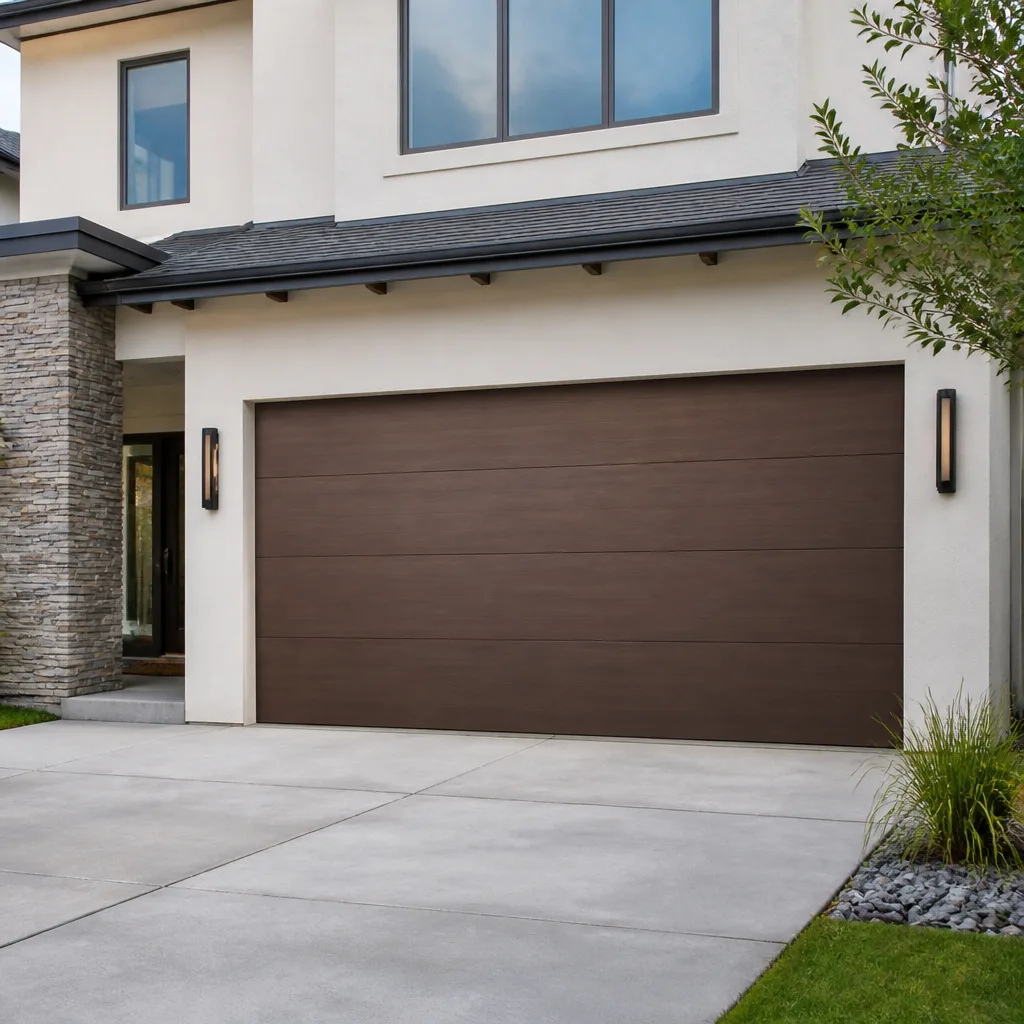 Modern flush
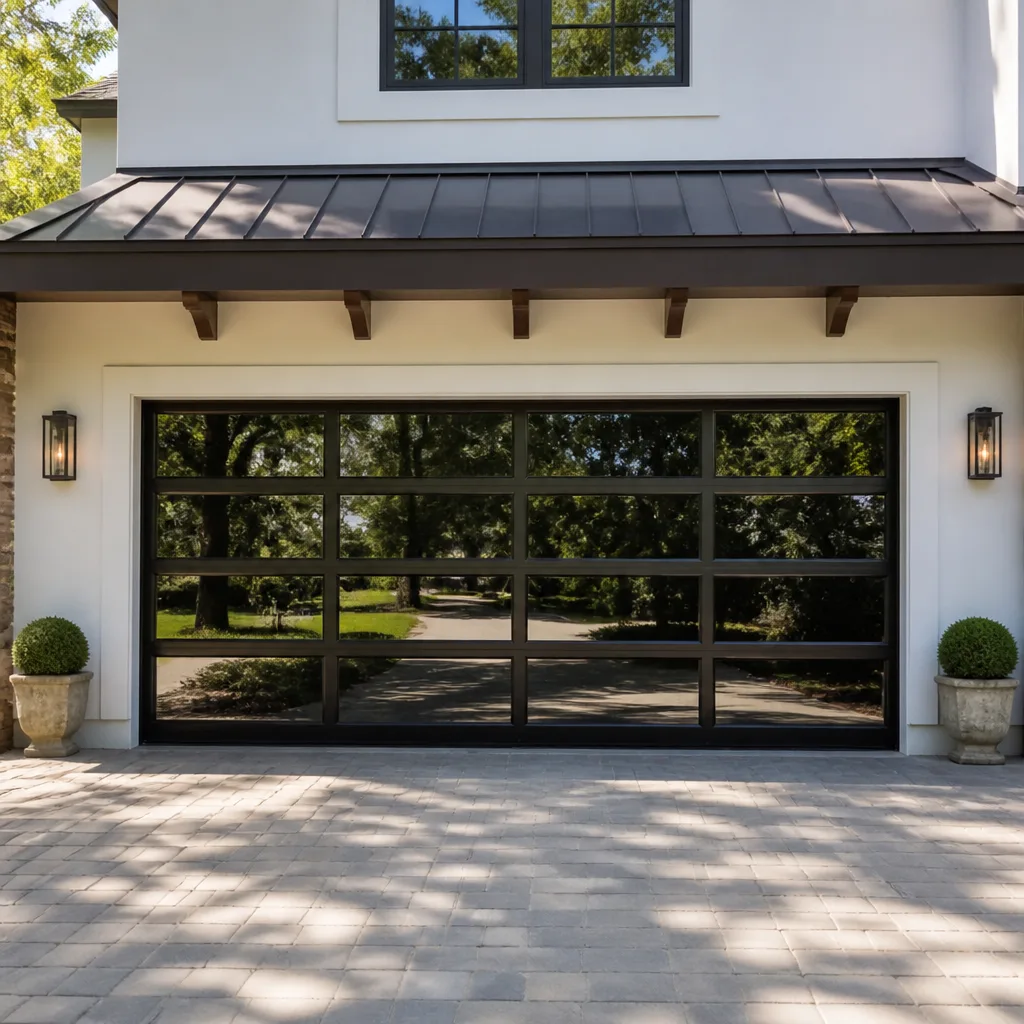 Full-view glass
 LiftMaster openers
 Chamberlain openers
Full 25-point door and opener safety check with every visit - springs, cables, rollers, tracks, and your LiftMaster or Chamberlain opener included
You get a price before we start. It does not change when the pro arrives.
Get your free estimateHow to Hire a Garage Door Contractor in Chesapeake: A Step-by-Step Guide
Virginia doesn’t require a specialty license for garage door work. That surprises most homeowners, and it’s the single biggest reason people in Chesapeake end up paying a generalist to do a specialist’s job. Anyone holding a contractor license, or in some cases less, can legally take your spring replacement or opener install. The credential that actually matters is one almost nobody asks for. This guide walks you through what to verify, the exact questions that separate a true garage door specialist from a handyman who “does doors too,” and how to read a quote so the number you sign is the number you pay.
Quick Answer
To hire a garage door contractor in Chesapeake, verify the contractor’s Virginia DPOR license class and ask for a certificate of insurance naming you as certificate holder, then screen for single-trade specialization by asking five specific questions about your door’s spring system, opener brand, and safety setup. Get a written, itemized quote before any work starts, and confirm the contractor is licensed and insured as their state requires. The cheapest bid on a spring job is usually the most expensive outcome over two years.
Styles & brands we work with
- Raised-panel steel
- Carriage house
- Modern flush
- Full-view glass
- LiftMaster openers
- Chamberlain openers
Table of Contents
- What Virginia’s Contractor Licensing Tiers Mean for Garage Door Work
- Five Phone-Call Questions That Separate Specialists From Generalists
- Hampton Roads Red Flags: Out-of-Area Companies and Storm Chasers
- How to Read a Garage Door Quote Line by Line
- Why the Cheapest Spring Bid Costs More Over Two Years
- Brand Fluency: What to Ask Before You Sign
- Hiring for Emergency and After-Hours Repairs
- What a Fair Written Contract Should Include
What Virginia’s Contractor Licensing Tiers Mean for Garage Door Work
Virginia regulates contractors through the Department of Professional and Occupational Regulation (DPOR), and the license classes are tiered by project dollar amount. Class C covers work under $10,000, Class B covers work between $10,000 and $120,000, and Class A covers work above that. Garage door jobs usually sit in Class C or low Class B territory, which means a wide range of licensees can legally handle them. That’s the loophole most homeowners miss.
Here’s what to verify before you sign anything:
- License class and status. Look up the contractor on the DPOR license lookup by their business name or license number. Confirm the class is appropriate for your project’s value and that the license is current, not expired or revoked.
- Trade-specific experience. A Class B license doesn’t tell you whether the holder has ever replaced a torsion spring on a Clopay door. Ask directly how many spring jobs they do in a typical month.
- General liability insurance. Ask for a certificate of insurance showing general liability coverage, and request that it name you as certificate holder for the duration of the job. Without this, if something goes wrong on your property, you’re the one exposed.
- Workers’ compensation. If the contractor brings helpers, ask whether they carry workers’ comp. If a helper is injured on your property and the contractor is uninsured, the liability can land on you.
- Written contract. Virginia requires a written contract for home improvement work above a certain dollar threshold. Get one regardless. Verbal agreements don’t hold up.
What this means in practice: a contractor who can legally take your job isn’t necessarily a contractor who should. The license is the floor. The specialization and insurance verification are the actual safety net. When you call to vet anyone, ask for the license number, the insurance certificate, and a written estimate in that order. A specialist will have all three ready. A generalist often won’t.
Five Phone-Call Questions That Separate Specialists From Generalists
You can screen a garage door contractor in about 15 minutes by phone. These five questions cut through sales talk and expose whether the person on the other end actually works on doors every day. Ask them in this order.
- “What type of spring system is on my door?” A specialist will ask whether it’s torsion (the springs mounted on a horizontal shaft above the door) or extension (springs running parallel to the tracks on each side). A handyman often doesn’t know the difference, or guesses. Spring work is the single hardest part of this trade, and getting it wrong is dangerous. If they can’t tell you which system they’re quoting on, stop the call.
- “How do you size a replacement spring?” The correct answer references wire gauge, inside diameter, and length, sometimes cycle life. A wrong answer (“we just match it visually”) tells you the spring will fail early.
- “Do you stock the brands I have?” Ask specifically about your door and opener brand. A specialist works across LiftMaster, Chamberlain, Genie, Clopay, Amarr, Wayne Dalton, Craftsman, and Raynor, and knows the quirks of each. A generalist will say “we can get parts” without naming any.
- “What’s your safety setup for spring work?” Winding bars, proper tension release technique, and a second person for large doors. There’s no safe shortcut on high-tension springs. If they describe the job casually, that’s the answer.
- “Will the price on the quote be the price I pay?” A specialist quotes in writing after seeing the door, itemizes parts and labor, and stands behind the number. A generalist often gives a low verbal number and finds “extras” on site.
Those five questions alone filter out most of the wrong calls. If you want to go further, ask what brand-specific issues they’ve seen with your opener model, or what a normal spring cycle life looks like. The person who knows will answer in detail without hesitation. We’ve watched these questions do more work than any review page, because reviews don’t tell you what kind of spring the reviewer had.
Hampton Roads Red Flags: Out-of-Area Companies and Storm Chasers
Chesapeake sits in the Hampton Roads region, which means it gets more than its share of transient storm damage traffic. After a big wind event or a fallen limb takes out a door panel, out-of-area companies with no local presence often flood community groups and door-knock neighborhoods with low bids. Those bids have a pattern.
- No local accountability. An out-of-area company may not have a Chesapeake business address, local references, or a technician who can return in a week if the repair fails. Ask where they’re based and who handles warranty work.
- Pressure to sign today. Legitimate contractors don’t need a same-day signature on a routine replacement. If someone pressures you because “this price is only good now,” walk away.
- Verbal quotes only. A written quote is your protection. If they can’t put it on paper, they don’t have a quote.
- Vague parts language. “We use quality springs” without naming the wire gauge, length, or cycle rating is a red flag. Springs are one of the few parts you should always specify.
- No license number on the estimate. Virginia requires contractors to include their license number on advertising and contracts. If it’s missing, ask why.
The flip side of that list is what trustworthy local work looks like. A specialist quotes in writing, specifies parts, names their license and insurance, and doesn’t need the pressure tactic because the work speaks for itself. This is why single-trade focus matters so much when you’re hiring for garage door repair in Chesapeake: the company that only does doors has more to lose from a bad job than one that treats your door as one of twenty trades it handles.
How to Read a Garage Door Quote Line by Line
A fair garage door quote should itemize three things: parts, labor, and any disposal or haul-away. When those categories get collapsed into one number, the contractor has room to shift costs and the customer has no way to catch it. Here’s how the language usually breaks down.
- “Labor included.” This is fine as long as the parts list is specific. The problem arises when “labor included” appears on a spring replacement without a spring spec. Labor for a two-spring replacement on a well-maintained door is short. Labor on a door with corroded drums or bent tracks is much longer. If the quote doesn’t say which springs go in, you can’t compare it to another quote.
- “Parts at cost.” Sometimes that’s a legitimate pass-through. Sometimes it means a low parts number paired with an inflated labor rate. Ask for the full price math: parts cost plus labor rate equals total, not just a total.
- Disposal fees. Old doors, panels, springs, and openers have to go somewhere. A good quote lists this separately or says explicitly that it’s included.
- Spring quantity. If the quote is for a matched pair, that’s usually correct. If it’s for one spring on a door where the other is the same age, ask why. Pair replacement is standard practice.
- Warranty language. Ask what’s covered and for how long, and whether the warranty is on parts only or parts and labor.
One more thing: the quote should specify the brand and model of any replacement opener, and the model number of the door if you’re replacing it. If the quote says “a LiftMaster” without a model, you’re guessing. If it says “a Clopay door” without the series, the same. Specificity in the quote is a tell for how the whole job will go, because the contractor who bothers to write it all down is usually the one who bothers to do it right. For a fuller breakdown of part-level costs, our page on garage door opener repair lays out what each component usually runs.
Why the Cheapest Spring Bid Costs More Over Two Years
Springs are a high-tension mechanical part, and not all springs are equal. A low-cycle spring bought on price fails faster than a properly specced spring, and when it fails, you’re paying for the same job twice inside two years. That’s the calculation most homeowners miss when they compare numbers on the phone.
A typical residential torsion spring is rated in cycles. The cheaper the spring, the lower the cycle count. You can’t tell from looking at the coil, but the spec sheet will tell you. When a quote is dramatically lower than everything else you get, ask what cycle rating they’re installing and what warranty they offer. If they can’t answer both, the low number isn’t real.
There’s a second cost that doesn’t show up in the bid at all: the risk of a poorly-spec’d spring failing at the worst time. A door that opens on a failing spring can become a jammed door with a snapped spring trapped inside a tight housing. That’s a harder job to fix, and it usually happens on a weekday morning when you need to leave for work. The economics aren’t close. Paying appropriately for a correct spring is cheaper than paying for a wrong one plus the repeat labor.
That’s the whole case for specialization in one paragraph. A garage door specialist replaces springs for a living, so the spec is on their standard quote. A handyman doing doors on the side has no cycle-life default to fall back on, and the customer absorbs that risk.
Brand Fluency: What to Ask Before You Sign
Garage door hardware isn’t universal. LiftMaster and Chamberlain openers share a lot of lineage, but Genie has its own logic in the head unit and remote programming. Door brands diverge too: a Wayne Dalton door with its proprietary track system handles differently from a Clopay or Amarr door of the same width, and panel profiles aren’t interchangeable between brands.
Ask before signing:
- “What brands do you work on regularly?” The answer should name several without hesitation. Ours are LiftMaster, Chamberlain, Genie, Clopay, Amarr, Wayne Dalton, Craftsman, and Raynor, and each has its own quirks that come with repeated work.
- “What’s the common failure point on my opener model?” If they know the model, they’ll name the bushing, the logic board, the travel limit, or the safety sensor. If they don’t, they’ll get general.
- “Do you keep the right spring for a Clopay door in spec, or do you need a custom order?” Springs are sized by door weight, not brand, but knowing the door’s construction matters when the existing spring is already outside spec.
- “Can you match my door finish and panel pattern?” For a single-panel replacement, brand match matters. For a full replacement, ask whether they can source the brand you already have.
When you need a full replacement and want brand options rather than a one-brand pitch, garage door installation is where the plans and measurements live. The right answer at the quote stage isn’t always the cheapest door. It’s the door that matches your opening, your opener, and the maintenance pattern you’re actually going to keep.
Hiring for Emergency and After-Hours Repairs
Emergency garage door service means different things to different companies. For a broken spring, a door that’s stuck half-open, or a snapped cable, the door has to come down safely before anything else happens. That’s not a job for a generalist on a callout, and it’s not a job for a homeowner with a pry bar.
When you call an emergency line, ask three things in order:
- “Are you sending a trained garage door technician today?” If they can’t answer directly, keep calling.
- “What’s the likely fix and the price range?” You want a range, not a promise. Spring and cable jobs vary by door and by how much hardware has failed.
- “What’s the safety plan while the door is down?” A stuck-open door is a security issue and a fall risk for anyone on the property. Make sure they tell you what to do with the door in the meantime.
Never try to close a door with a broken spring by force. The springs and cables carry enough stored tension to cause serious injury, and the parts that fail under load can snap. That’s the reason this trade has a technical depth that handymen often don’t have. A company that handles emergency garage door work should be able to walk you through making the door safe while you wait, without inviting you to do the repair.
What a Fair Written Contract Should Include
The written contract is the final checkpoint before work starts. If any of the following is missing, pause and ask for it in writing. A specialist has no reason to push back on any of these.
- License number. Virginia requires it on contracts and advertising.
- Insurance certificate. General liability at minimum, and workers’ comp if helpers are on site.
- Itemized parts and labor. Spring spec (if spring work), door or opener model (if replacement), disposal line, total.
- Warranty terms. Parts, labor, and duration, in plain language.
- Start and completion expectations. For scheduled work, an accurate window. For emergency, a same-day arrival time.
- Payment terms. No large cash deposits up front on routine repairs. Payment after the work is complete is standard for this trade.
- Signed and dated by both parties. A verbal agreement isn’t a contract.
If the written contract has all seven, you’ve done more due diligence than most homeowners in Chesapeake ever do. If it’s missing two or more, call someone else. The best time to find that gap is before the door comes down, not after the invoice arrives.
Common Mistakes to Avoid
- Skipping the license lookup. Most homeowners never check DPOR. A five-minute search by business name or license number would catch expired licenses and trade mismatches before the job starts.
- Not naming yourself on the insurance certificate. A contractor can be insured and still leave you uncovered if the policy doesn’t list you. Ask for the certificate holder line to be in your name.
- Accepting a verbal quote. Verbal quotes are the most common source of invoice surprises in Hampton Roads. Written, itemized, signed before work starts.
- Hiring after a storm without local references. Out-of-area companies that show up after wind or hail damage often vanish before warranty work is needed. Ask for a Chesapeake address and two recent local references you can actually reach.
- Replacing one spring when the pair is the same age. The other spring is on the same clock. A matched pair replacement saves a second service call within a year or two.
- Ignoring cycle rating on a spring quote. Two quotes can look identical and spec very different springs. Ask what cycle rating is included and what the warranty says.
- Trying to adjust a torsion spring yourself. The most dangerous call we hear about. Springs and cables carry stored energy that can kill an untrained person. Call a trained professional.
See the difference
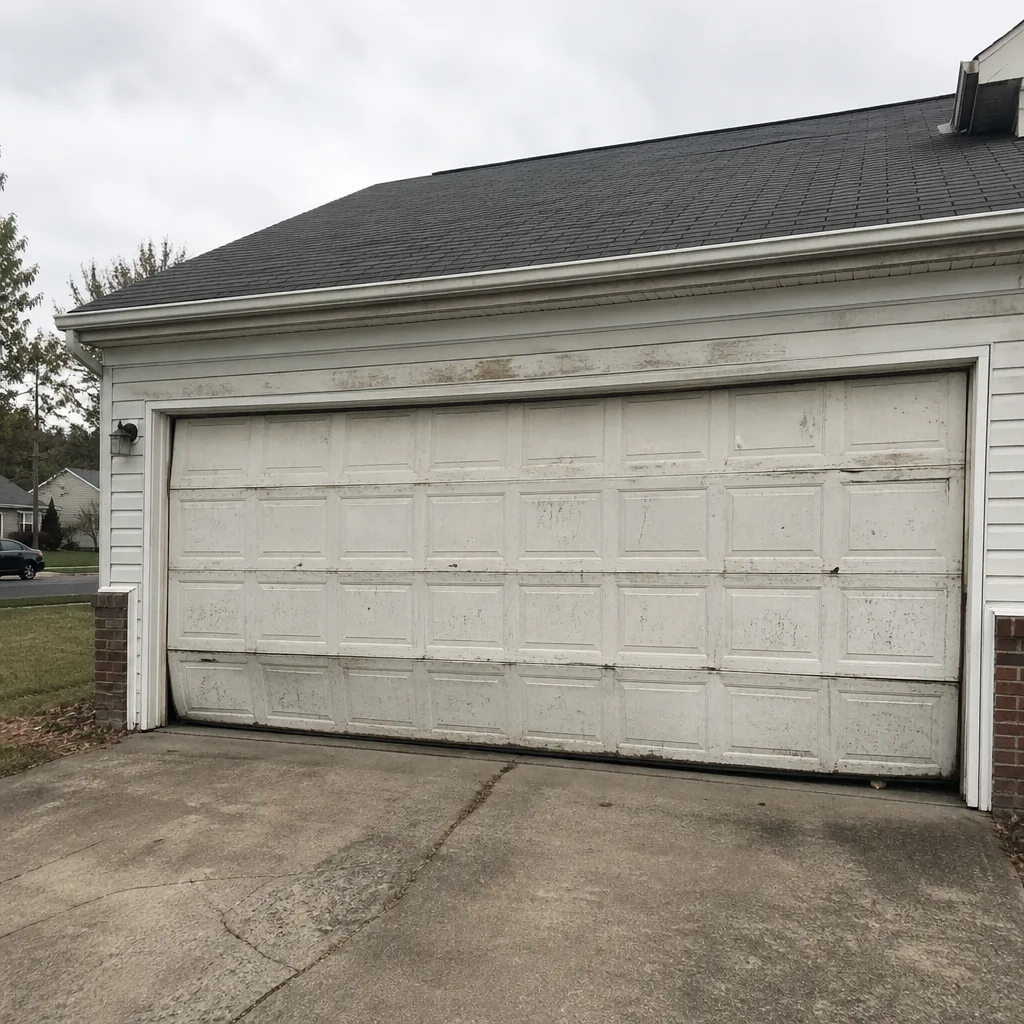 Before
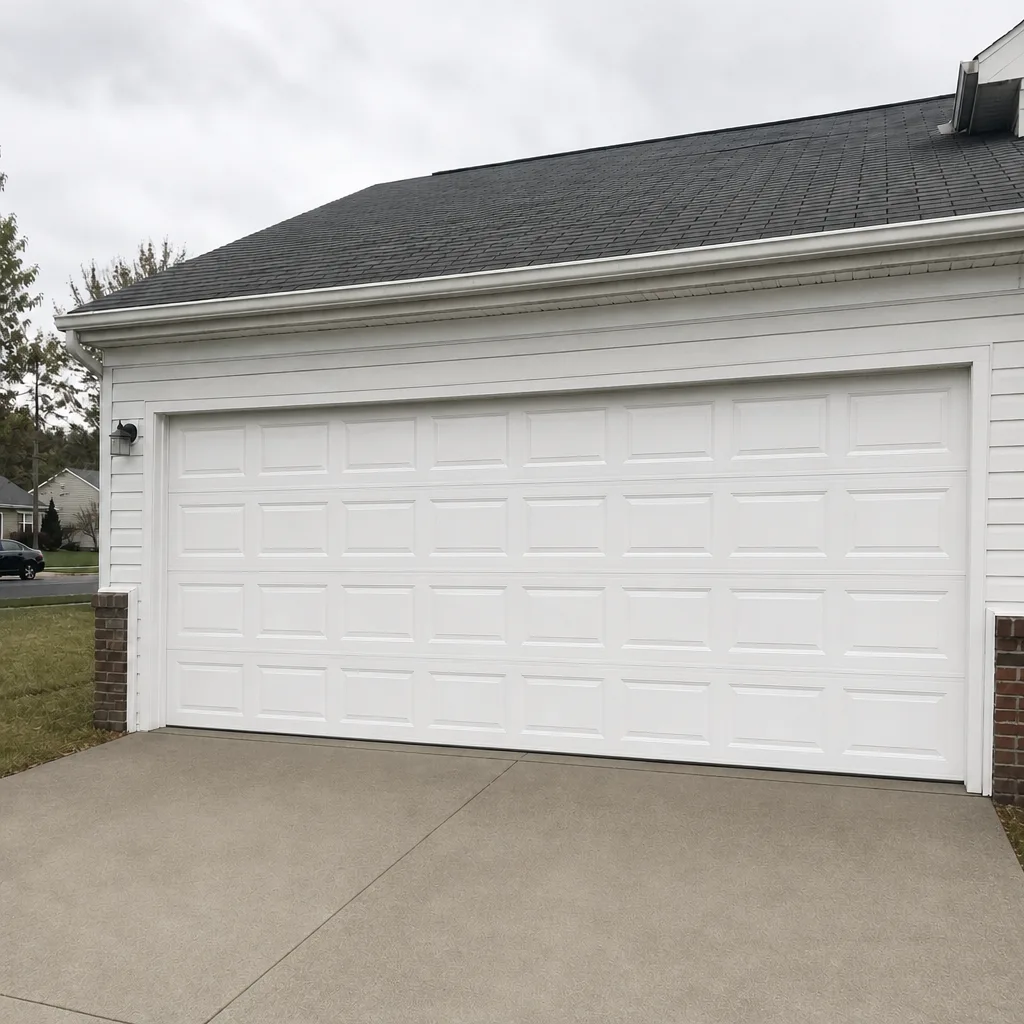 After
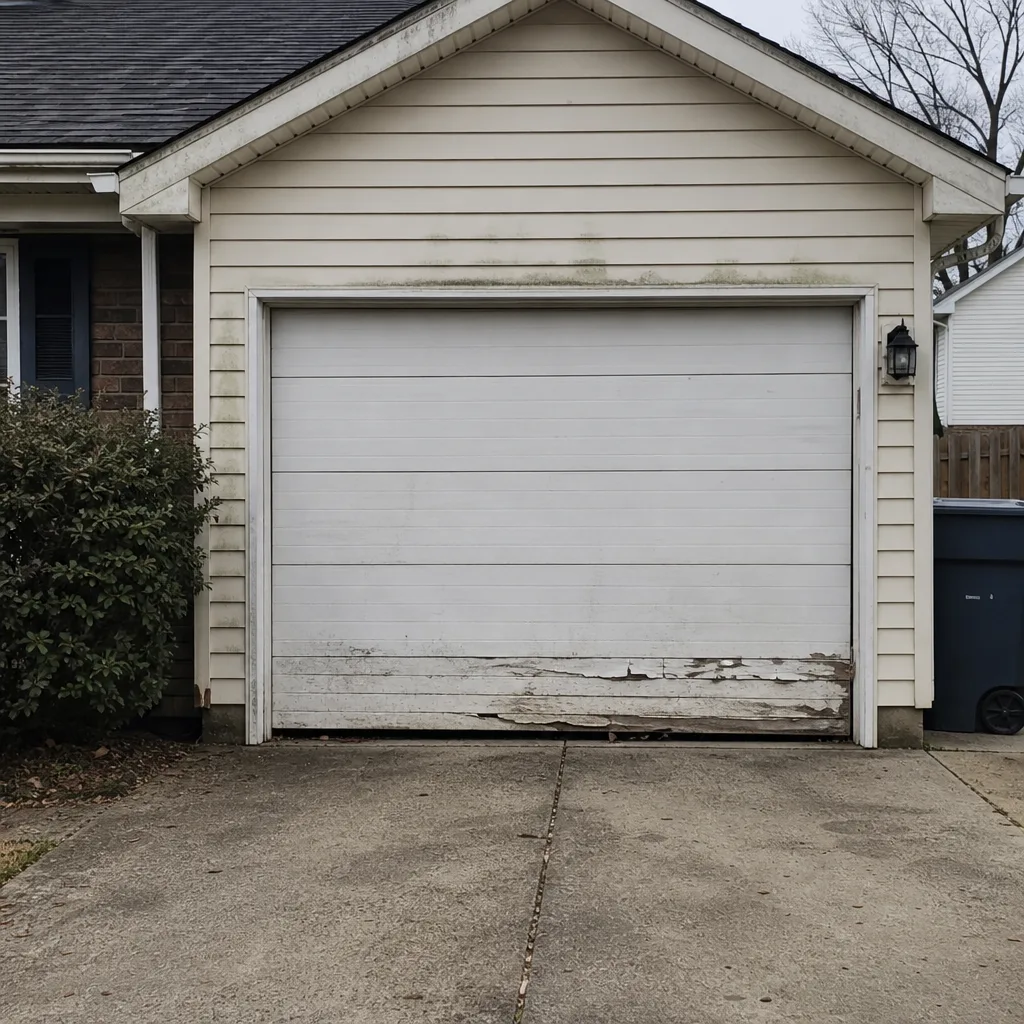 Before
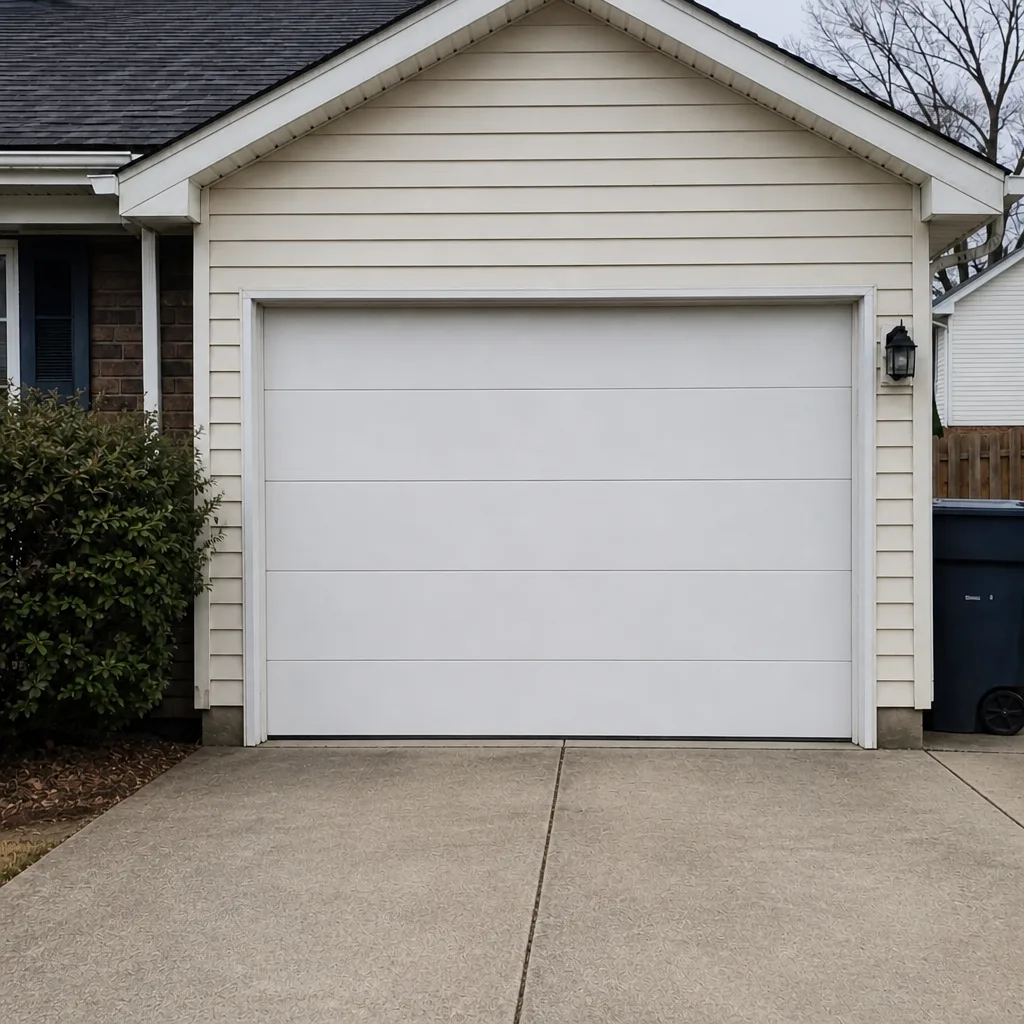 After
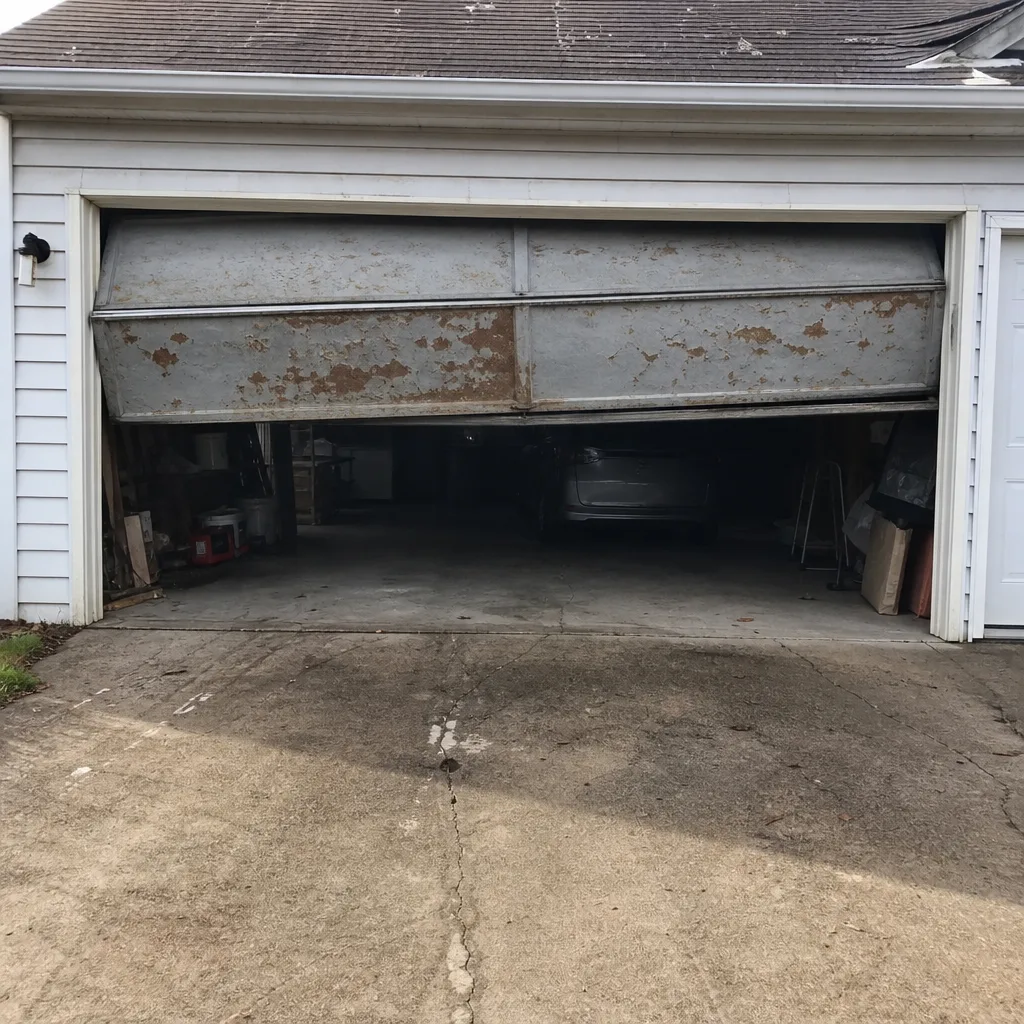 Before
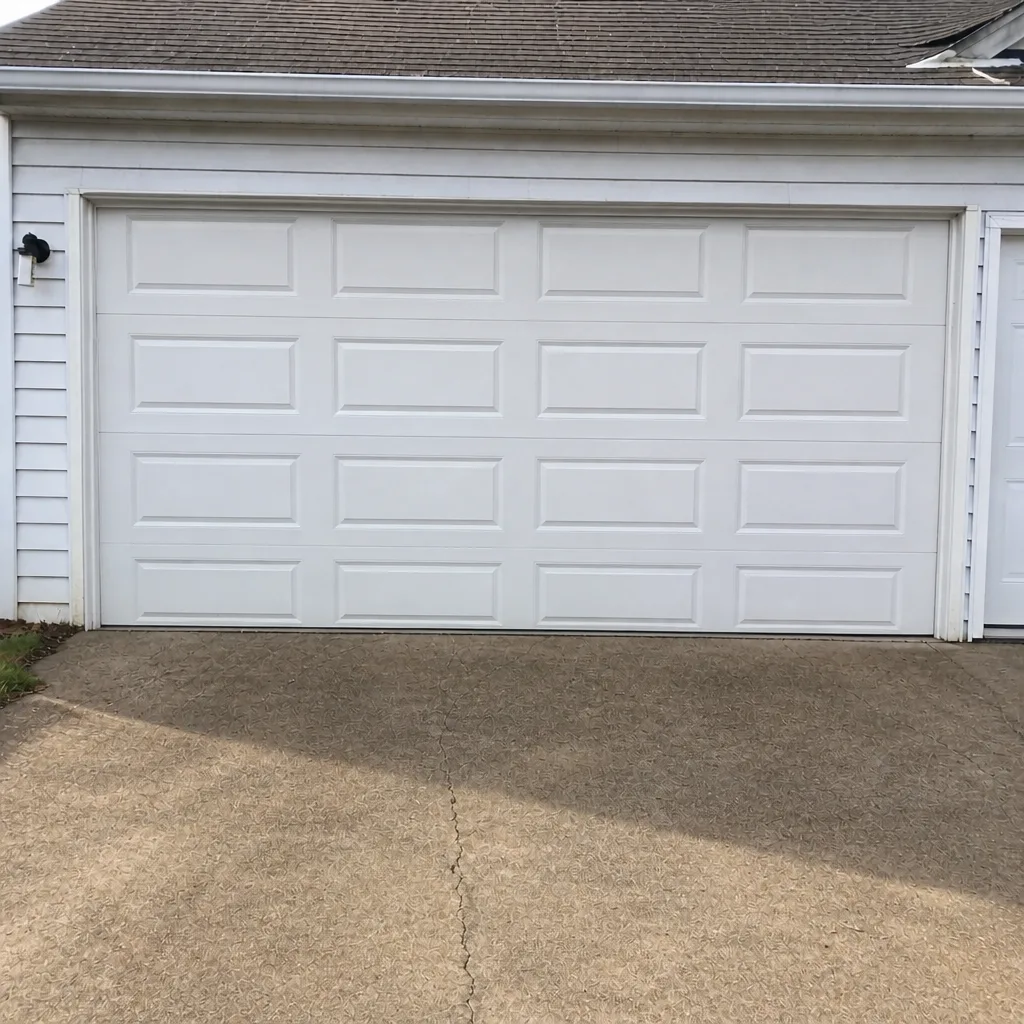 After
When to Call a Professional
Some garage door problems are safe to observe and impossible to fix safely without training. Call a professional if the door won’t stay balanced, if the spring looks stretched or has visibly separated, if the cables are frayed or off the drum, if the door reverses intermittently or won’t close all the way, or if the opener runs but the door doesn’t move. These are all signs of stored-energy failures or door misalignment, and forcing a door that fails any of those checks can turn a repair into a replacement. Emergency work is the same rule, only faster: a door stuck open at night is a security issue, and a door with a broken spring needs a trained technician before anything else happens. We’re a single-trade garage door specialist, and we can tell you over the phone whether your situation is routine or immediate. For any of these, our team at Chesapeake Garage Door Repair Pros is the call to make. Free estimates in Chesapeake – call (866) 834-6826.
Frequently Asked Questions
Look up the contractor on Virginia’s DPOR license lookup by their business name or license number, and confirm the class matches your project value. A Class C covers jobs under $10,000, Class B covers up to $120,000, and Class A covers above that. Ask for the number in writing on the quote before you sign; Virginia requires it on contracts and advertising. For an exact quote, call (866) 834-6826 – estimates are free.
No. Virginia does not require a garage door-specific specialty license. What it requires is a contractor license appropriate to the job value, which means Class C, B, or A depending on the total. That’s why asking about trade-specific experience matters more than the class alone.
Typical ranges in the Chesapeake market are $180-$340 for a single torsion spring replacement and roughly double that for a matched pair, since pairs are usually replaced together. The written estimate sets the final price, and any reputable contractor will quote in writing before work starts. Call (866) 834-6826 for an exact quote on your door.
Emergency garage door service is available for situations that can’t wait for a next-day appointment window, including broken springs, snapped cables, and doors stuck open. Call (866) 834-6826 and we’ll tell you the next available window and the likely price range for the fix. Don’t try to force a stuck door closed in the meantime.
A specialist should name brands without hesitation and speak to their quirks, not just list them. Ours regularly work on LiftMaster, Chamberlain, Genie, Clopay, Amarr, Wayne Dalton, Craftsman, and Raynor. If a contractor can’t say which brand-specific issues they’ve seen on your opener or door, they likely don’t work on your equipment often.
The price should be quoted and agreed before any work starts. A written estimate is the number you pay, and if the technician finds an issue the quote didn’t cover, they should stop and re-quote before touching anything. Ask explicitly for that policy before you book; a specialist has no problem putting it in writing. Call (866) 834-6826 for a free estimate.
The Bottom Line
Hiring the right garage door contractor in Chesapeake comes down to three checks: verify the DPOR license and insurance certificate, screen for single-trade specialization with the five phone-call questions, and get a written, itemized quote before any work begins. The cheapest bid on a spring job usually costs more over two years because low-cycle springs fail early and the repeat labor eats the difference. A specialist quotes springs in spec, knows your brand, and stands behind the number. Our technicians have up to 13 years of experience, and we work on doors every day, not doors as a side job. Call (866) 834-6826 for a free estimate and a written price you can compare.
If you’d like help with a specific issue, we handle everything from a single spring to a full replacement. Start with garage door repair for a quick diagnosis, or garage door installation when it’s time for a new door.
Written by the team at Chesapeake Garage Door Repair Pros.