Last updated November 22, 2026
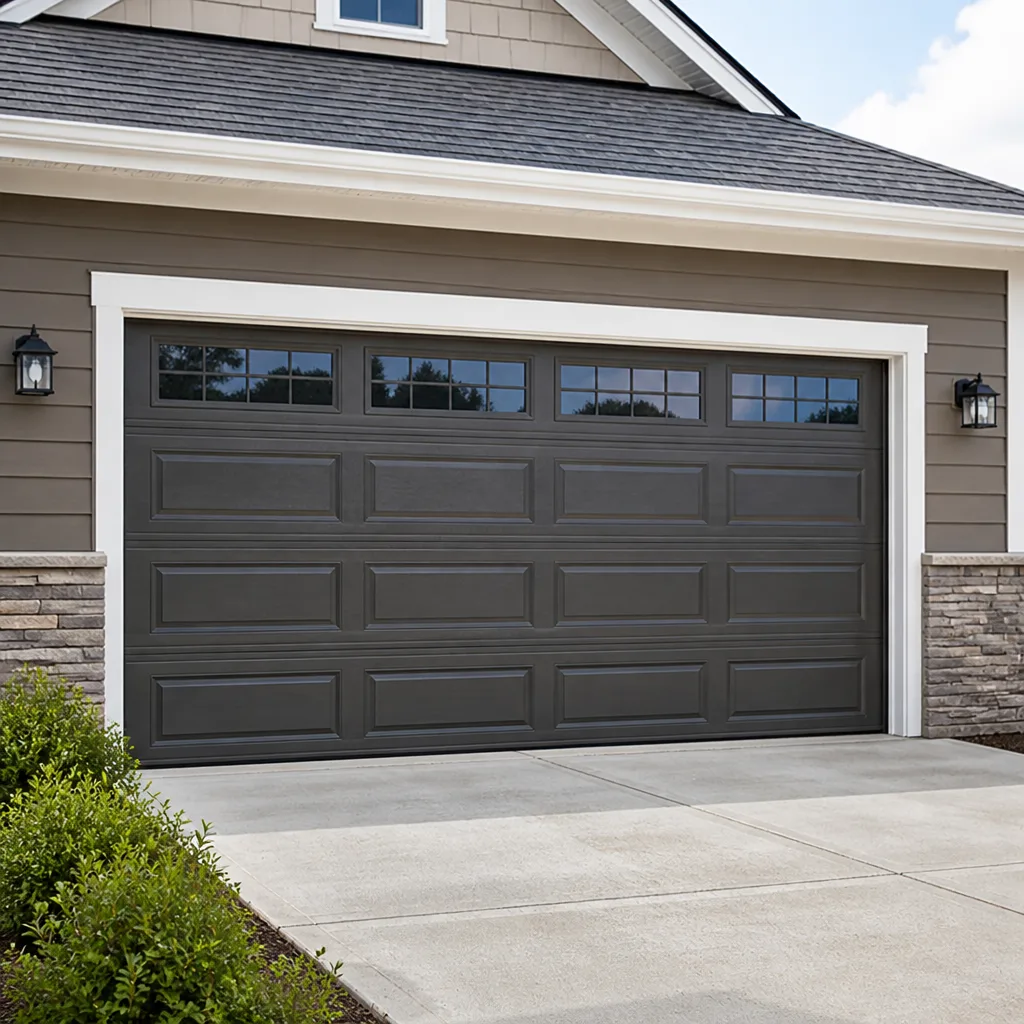 Raised-panel steel
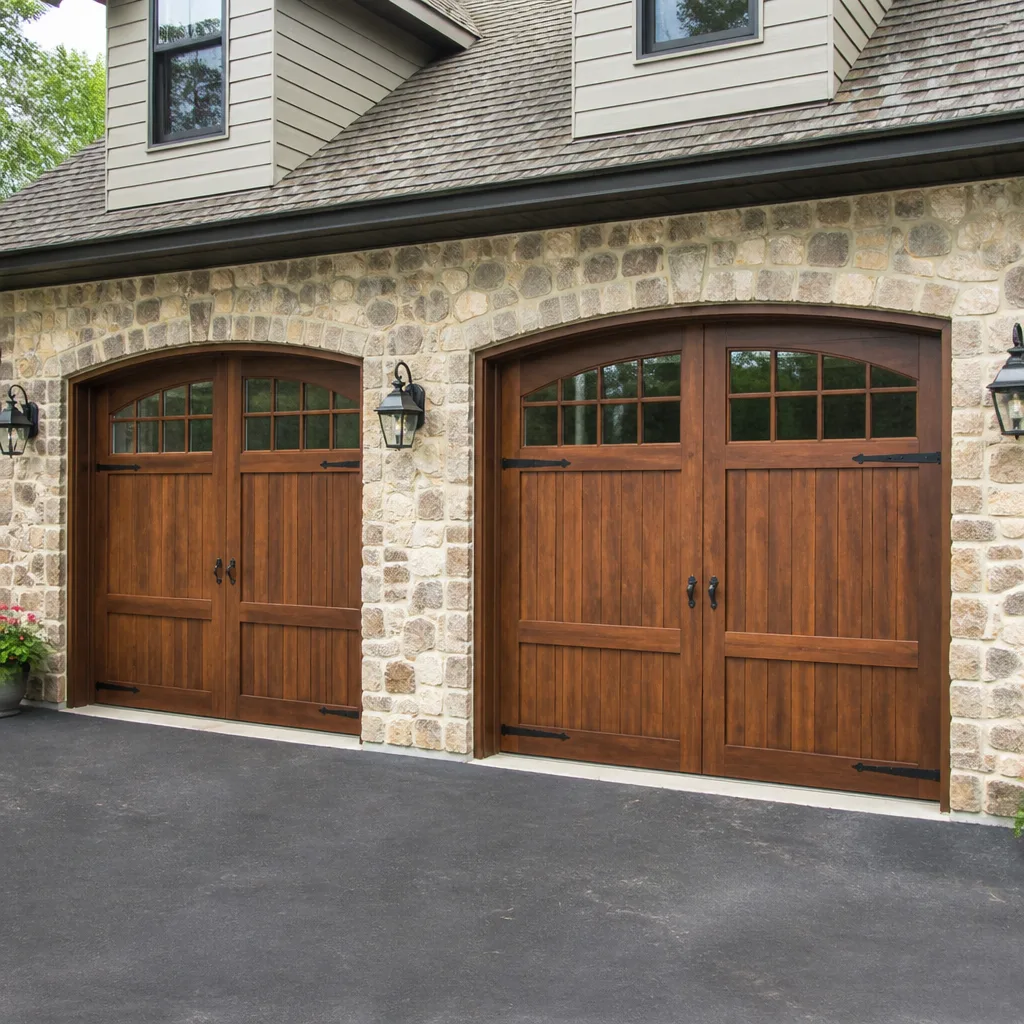 Carriage house
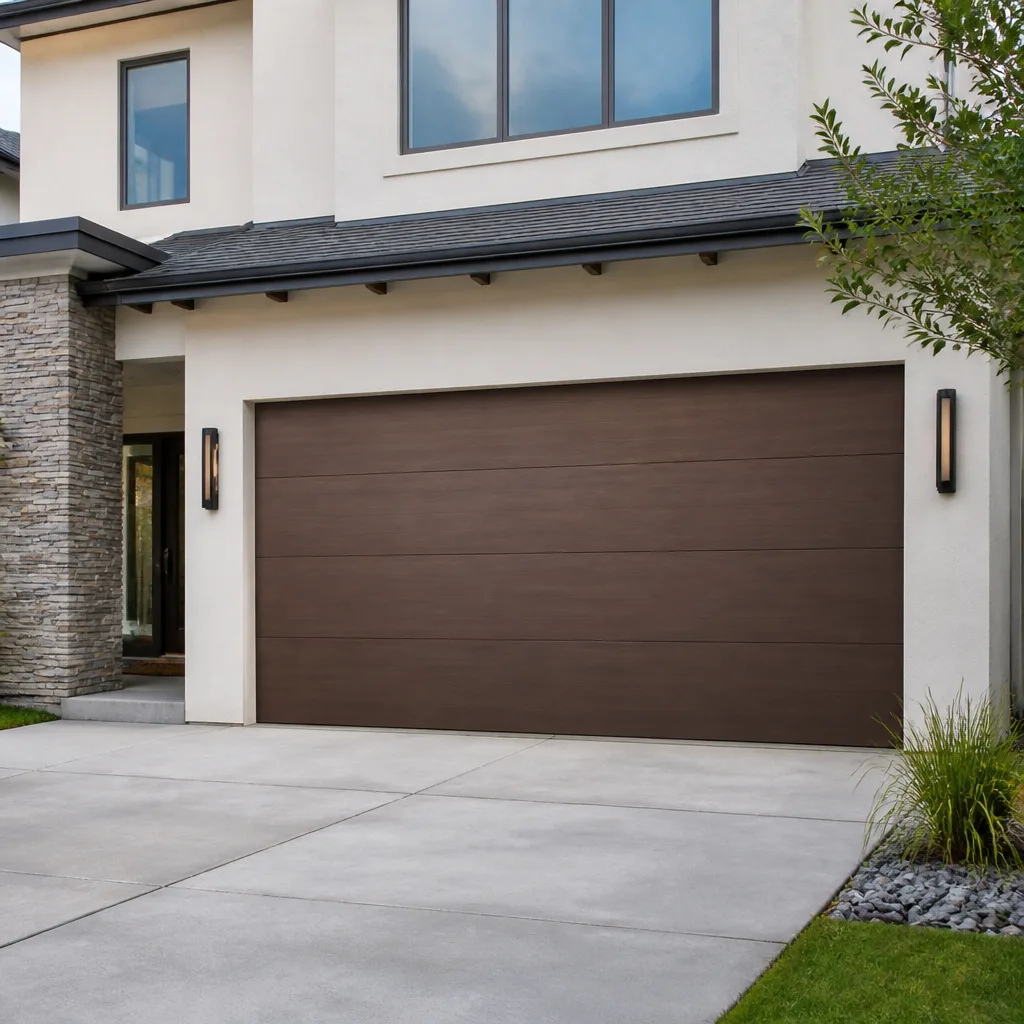 Modern flush
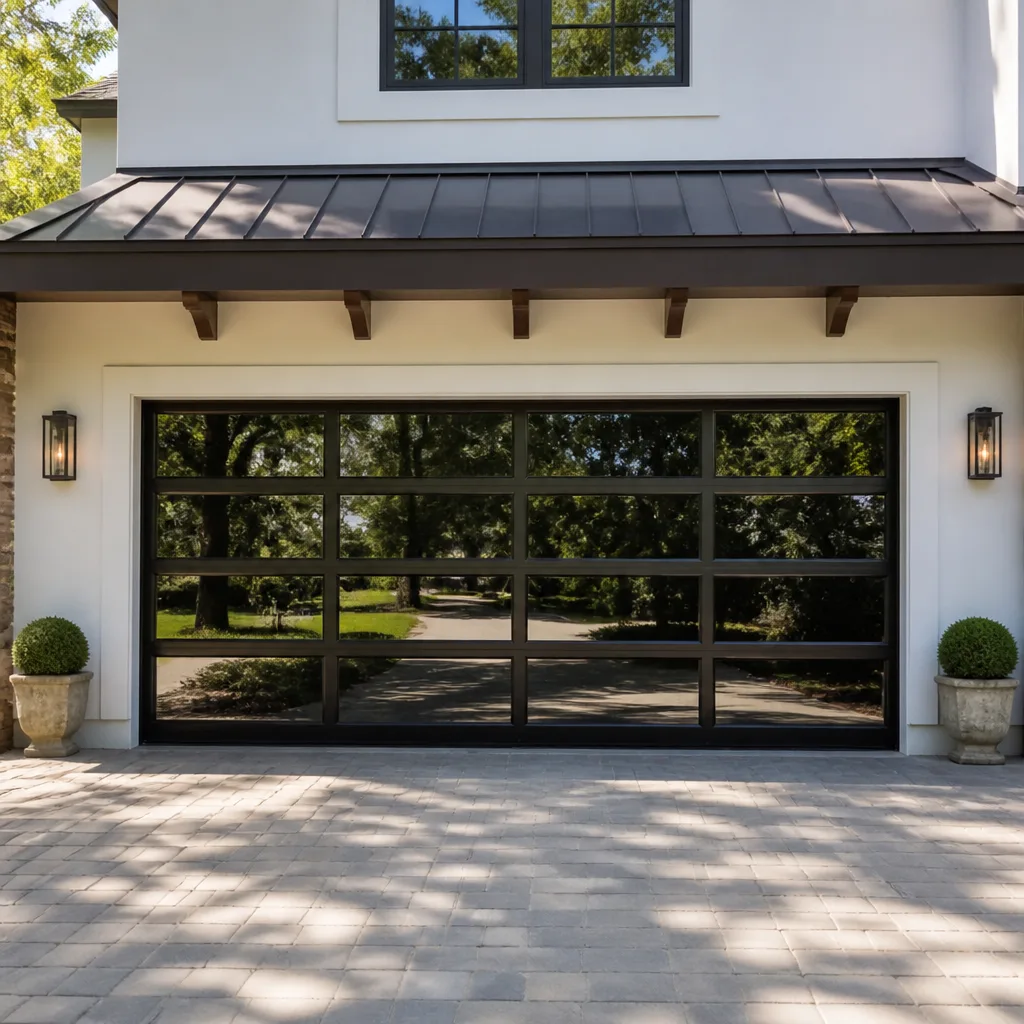 Full-view glass
 LiftMaster openers
 Chamberlain openers
Full 25-point door and opener safety check with every visit - springs, cables, rollers, tracks, and your LiftMaster or Chamberlain opener included
You get a price before we start. It does not change when the pro arrives.
Get your free estimateGarage Door Warning Signs: A Chesapeake Homeowner’s Reference Guide
A door that’s taking two seconds longer to open than it did six months ago isn’t “a little slow.” It’s an opener motor pushing against resistance that didn’t used to be there, and if the underlying cause isn’t handled, that resistance will wear out the drive gear before long. The trouble is that most homeowners only recognize the final symptom, the loud bang or the sudden dead door, because nobody ever taught them to read what comes before. Warning signs arrive in a sequence. This guide maps that sequence for you, from the noise you should notice first to the moment you need to stop using the door entirely. We’ll cover what each sound means mechanically, a 30-second balance test, and the visual checks that tell you a cable is about to fail. If you live in Chesapeake, some of these signs show up for the same reasons they do everywhere and a few for local ones.
Quick Answer
The earliest garage door warning signs are usually sound and speed changes: grinding, popping, scraping, or a door that opens noticeably slower than it used to. Those early signs mean service within the week. The signs that mean stop using the door now are a visibly frayed or slack cable, a door hanging crooked, a snapped spring, or a door that won’t stay up, because any of those can drop the door or send high-tension parts loose. In Chesapeake, we see these progress from a manageable repair to an emergency failure when homeowners wait, so the goal of this reference is to help you recognize the sequence early.
Styles & brands we work with
- Raised-panel steel
- Carriage house
- Modern flush
- Full-view glass
- LiftMaster openers
- Chamberlain openers
Table of Contents
- Why Warning Signs Arrive In Sequence
- Symptom-to-Cause Map: What Each Noise and Behavior Means
- The 30-Second Balance Test Every Homeowner Should Know
- Cable Fraying: The Visual Checks You Can Do Without Tools
- Corrosion Signs on Brackets and Roller Stems in Chesapeake
- Schedule-This-Week vs. Stop-Using-the-Door-Now
- Opener Warning Signs That Get Missed
- Common Mistakes to Avoid
- When to Call a Professional
Why Warning Signs Arrive In Sequence
Garage doors fail in a predictable order because their parts fail in dependency, not all at once. A spring slowly loses tension, the door grows heavier, the opener motor works harder to lift it, and the strain shows up first as a sound, then as a speed change, then as the opener’s internal drive gear wearing out. By the time the door stops opening, several smaller failures have already stacked up.
That sequencing has one very practical consequence: the part that finally dies is rarely the part that started the problem. If you replace an opener that burned out without addressing the worn springs that overloaded it, the new motor is going to struggle against the same resistance. Fast diagnosis means tracing the symptom back to where the sequence began.
In Chesapeake, the sequence tends to move at a steady pace for two reasons. Switching seasons bring temperature swings that make a weak spring behave differently in the cool of the morning than it does in the heat of the afternoon, so a marginal spring can seem fine one day and sluggish the next. And the humidity most of the year means moisture finds the metal parts that carry load, adding wear on top of the mechanical fatigue. A homeowner who learns to notice the early steps will nearly always be able to call for garage door repair before the failure step arrives.
Here’s how the typical progression looks:
- Sound and speed change. The door gets noisy or slower. The mechanism is under more resistance, but it still works. This is your best and least expensive window.
- Intermittent function. The opener reverses for no clear reason, the door stops partway, or it only closes on the second push. Something is now actively binding.
- Visible wear or misalignment. The door looks crooked, a cable looks frayed, or a spring has visibly loosened. Mechanical parts are now near their limit.
- Failure. The door won’t open or close, a spring snaps, or a cable lets go. This is the emergency where you need service in a hurry.
The point of learning this sequence isn’t to make you anxious about your door. It’s that step one, caught early, is a simple fix. Step four, at the worst moment, is inconvenient. The gap between the two is the whole reason this reference exists.
Symptom-to-Cause Map: What Each Noise and Behavior Means
Homeowners are often told their garage door “could be several things.” That’s not useful. In our experience, a specific sound maps to a specific mechanical source more often than not, and knowing the source tells you how urgent it is. Here’s the mapping we work from.
- Grinding. Metal-on-metal contact, usually a dry or worn bearing, a worn roller, or the opener’s gear and sprocket. A gear-and-sprocket grind that worsens over a week or two often points to internal wear on an older opener unit, and that’s a motor problem, not a door problem.
- Popping or a bang. A load shifting suddenly. A pop from the ceiling-mounted track area can mean a roller jumping its track or a torsion part releasing. A single sharp bang followed by a dead door usually means a spring has snapped, and that’s a top-tension failure, not a minor noise.
- Scraping. The door panel itself rubbing the frame, the weather seal dragging, or the bottom panel pulling against a misaligned track. Scraping usually tracks with a vibration you can feel if you touch the frame while it moves.
- Rattling or banging while moving. Loose bolts and hinges, worn rollers with excess play in their stems, or a loose track. A rattle is the least urgent of these noises but the easiest to catch early.
- Humming with no movement. The motor gets power but the door doesn’t move. A stripped drive gear, a broken coupler, or a reengaged manual release. The opener is trying to work; the connection to the door is broken.
- Slow, labored opening. No noise change, just less speed. Weak springs, a binding track, or an opener near the end of its lift capacity. This one matters because it’s the predecessor to almost every other failure on the list.
- Reversing before it closes. A misaligned safety sensor, a track pinch, or an obstruction. If the sensor lights are aligned and the door still reverses, look to the mechanical side.
Brand context helps here. A Wayne Dalton or Craftsman opener will often fail its internal drive gear before the door side of the system shows much wear, while a LiftMaster unit might keep working long past the point where the door’s hardware is telling you it’s time for a spring replacement. We work across the major brands, which means we read your brand’s failure pattern, not a generic checklist. If the noise is opener-side, that’s garage door opener repair territory; if it’s in the door’s own hardware, it’s door repair.
The 30-Second Balance Test Every Homeowner Should Know
Most homeowners don’t know there’s a way to test their springs without tools, but there is, and it takes about 30 seconds. The balance test tells you whether your springs are still doing their job or whether the opener has been picking up the slack, which is the single most common cause of premature opener failure.
Do this from a safe position, standing to the side of the door, not underneath it. Never put yourself in the path of a moving or held door.
- Close the door fully and pull the manual release cord hanging from the opener to disconnect the door from the motor.
- Lift the door by hand to about halfway open and let go.
- Watch what happens. A balanced door with healthy springs will stay put, or drift only slightly. A door with weak or worn springs will sag down toward the closed position under its own weight.
- Then try the opposite. Lift the door fully and check that it stays open. A door that won’t hold itself open has springs that have lost their lift.
- Reconnect the door to the opener before using it normally.
What the result means: if the door drifts down from halfway, your springs are weak and the opener has been compensating, which is why it’s slow or straining. If the door drops fast or you can feel a hard resistance on one side, stop and call a professional. Weak springs lead to burnt-out openers, but a spring on the edge of failure is a hazard, and this test is diagnostic only, not a repair. High-tension springs are not a do-it-yourself component, and we’d rather you never handle one.
In Chesapeake, run this test twice: once in the morning and once again in the afternoon heat of summer. Temperature affects spring tension, and a door that passes in the morning can show its weakness when the metal is warm. If it fails either time, treat it as a spring problem and get it evaluated before the opener suffers too.
Cable Fraying: The Visual Checks You Can Do Without Tools
Lifting cables are among the most dangerous parts of a garage door, so this section is about looking, not touching. A frayed cable can snap without much warning, and when it does, the door can drop unevenly on one side. Here’s what to check with your eyes only.
- Look at the cables themselves. On the sides of the door, you’ll see thin steel cables running from the bottom corner up to the drum above. Healthy cable looks tight and smooth. A frayed cable shows broken strands sticking out, a fuzzy appearance, or a kink in the line. Any of those means the cable is failing and the door should be taken out of service.
- Check for slack. With the door closed, both cables should have even tension. A cable that has gone slack or is hanging loose is not carrying its side of the load, and the door is at risk of coming down off-balance.
- Check the drum wraps. Where the cable winds onto the drum above the door, the wraps should be neat and even. Overlapping or tangled wraps mean the cable is not tracking correctly and can fail soon.
- Inspect the bottom brackets. These are the corner plates where the cable attaches at the bottom of the door. Look for rust streaks, cracks, or the cable end pulled loose. Never put your fingers near these brackets or loosen them, because the cable is under heavy tension there even when the door is closed.
- Watch for an uneven door. If one side of the door reaches the floor before the other, or the gap at the bottom isn’t even, a cable is likely slack on one side.
If you see broken strands, a slack cable, or a sagging door, stop using the door and call a professional. A cable failure is one of the signs that mean stop, not schedule. For routine cable or spring work, we’ll always tell you plainly what we’re replacing and why before any work begins, and the price is quoted and agreed before we start, so there are no surprises at the end.
Corrosion Signs on Brackets and Roller Stems in Chesapeake
Chesapeake’s humidity works on garage doors year-round, and the parts that suffer first are the ones that carry load at the bottom of the door and the small metal stems that connect your rollers to the panels. These aren’t cosmetic. A rusted bracket or roller stem is a structural warning that the part is weaker than it was when it was rated for the door’s weight.
Here’s what to look for during a walkaround of your own door:
- Bottom brackets: rust-colored streaks running down the panel below the bracket, flaking paint, or a bracket that looks pitted. These carry the full tension of the lifting cable, and they’re the last place you want corrosion.
- Bottom roller stems: the small shafts where the bottom rollers sit. A stem with rust or visible wear can seize, which makes the door drag and puts uneven strain on the track.
- Hinges and fasteners: rust blooming at the bolts that hold the hinges and track to the door. Loose or seized fasteners let the door shift, which can cause a scraping or rattling noise.
- Track edge rust: a rusted track edge can change the way a roller moves, and you’ll hear it before you see it.
In our experience servicing Chesapeake homes, the bottom hardware is where humidity damage shows first, because it’s closest to the slab and sees moisture at the floor line. A rusted bottom bracket or roller stem is a “schedule service this week” item, not an emergency, but it should not be ignored, because corrosion weakens the part quietly and a seized roller will wear out the door’s balance over time. A seasonal visual check at the bottom corners of your door is cheap insurance; it’s the fastest way to catch this before it turns into a cable or track problem.
Schedule-This-Week vs. Stop-Using-the-Door-Now
This distinction is the heart of this guide, so we’ll keep it cut and dried. The confusion between “this can wait a bit” and “do not touch this door” is what turns an affordable repair into an emergency. Here’s the split, with no middle ground.
Signs to schedule service this week
- A door that’s slower than it used to be, or one that seems to struggle.
- New or worsening grinding, rattling, or a persistent squeak.
- A door that reverses intermittently, or one that only closes on the second or third try.
- Uneven gaps at the bottom, or a door that looks slightly off-center.
- Rust on bottom brackets, roller stems, or hinges.
- An opener that struggles, runs loudly, or cycles on and off mid-travel.
These are all real problems that will worsen, but they’re your chance to handle them on your schedule rather than on the door’s. Scheduling service within the week keeps the cost and the disruption down.
Signs to stop using the door now
- A spring that has visibly snapped or is hanging loose.
- Any frayed or slack cable, or one that’s come off its drum.
- A door that has dropped unevenly or is hanging crooked in its tracks.
- A door that won’t stay up when you lift it, or one that comes down hard.
- Any time the door is off its track or a panel is bent out of the frame.
For that second list, do not run the opener and do not attempt to work on the door yourself. High-tension springs and cables can release suddenly and cause serious injury, so this is work for trained, properly equipped technicians. If your door fails outside our usual hours, our emergency service is built for exactly these situations; call and we’ll get someone out to you for an emergency evaluation.
Opener Warning Signs That Get Missed
Opener problems are often the most expensive to ignore, because a worn opener under strain doesn’t just stop working. It grinds its own gears to death trying to lift a door that no longer balances. If your springs have weakened, the opener wears faster, and if the opener is weak, the door suffers. That’s why we recommend addressing the balance and the opener together, not treating them as separate problems.
Watch for these opener-specific signs:
- Reversing for no reason. The door starts down, then goes back up. Most often the safety sensors are out of alignment or blocked, though a binding track can trigger it too. Realign the sensors and clean the lenses first; if it persists, it’s mechanical.
- Running only partway. The door stops a few feet from the floor or the ceiling. Travel limits, a stripped gear, or a hard obstruction are the likely culprits.
- Humming or buzzing with no movement. The motor is working but the door isn’t. That’s usually a failed gear, a broken coupler, or the manual release still disengaged. Check the cord pull first before you call.
- A wall button that does nothing. The remote or keypad works but the wall button doesn’t, or the reverse. That’s electrical, in the wiring or the control board, and it’s worth a proper diagnosis rather than a guess.
- Beeps and blinking lights without motion. Often a safety sensor or a force-limit warning from an opener that’s straining against a heavy door. The door is binding somewhere the opener can feel.
On brand, the failure patterns differ. A Raynor or LiftMaster opener might hum quietly and refuse to lift, while some older Craftsman and Wayne Dalton units grind loudly before the gear gives out. Knowing which family of opener you have tells us what to check first. And if the motor is at the end of its life, a full garage door installation with a modern opener can be the better move than chasing part after part on an aging unit. Either way, you’ll get a written estimate before you decide.
Common Mistakes to Avoid
- Ignoring a slow door because it still opens. A door that’s lost its speed has a resistance problem, and the longer the opener fights that resistance, the closer you are to a burnt-out drive gear. The delay is the mistake.
- Re-lubricating a spring or cable and calling it fixed. Lubricant quiets a symptom; it doesn’t restore tension to a spring or strength to a frayed cable. If your door was struggling before you sprayed it, it’s still struggling now.
- Running the opener after a spring snaps. A snapped spring means the motor is trying to lift the entire door weight unassisted. It will strain and grind the opener, often turning a spring repair into a spring-and-opener repair.
- Tightening cables or springs yourself. These parts are under heavy tension, and a wrong move can cause a serious injury. A homeowner adjusting a cable to stop a rattle is exactly the scenario that turns into a hospital visit, and it isn’t worth it. Call a trained technician.
- Assuming all services are equal. A generalist handyman or a big-box installer may handle the door itself but not the opener’s internal gear, the sensor logic, or a full spring replacement. A single-trade garage door specialist has seen these failures often enough to diagnose by brand quirks instead of trial and error.
- Skipping the balance test because it seems unnecessary. The 30-second test is the single best early warning you have, and it costs nothing. Do it when the seasons change and listen to what your door tells you.
- Waiting for the door to fail before booking service. Chesapeake’s humidity and seasonal temperature swings don’t stop working on your door while you wait. Getting a small issue handled while it’s still small is how you avoid an emergency call later.
When to Call a Professional
Some signs are for the calendar and some are for the phone. Call now, not later, if your door has snapped a spring, dropped unevenly, come off its track, won’t stay open, or if you see or hear a cable fraying or hanging slack. Those are the stop-using-the-door signs, and they call for immediate professional handling. Call to schedule this week if your door is slower than it used to be, has developed a new grind or rattle, reverses intermittently, or shows rust at the bottom brackets.
We work on all the major brands, including LiftMaster, Chamberlain, Genie, Clopay, Amarr, Wayne Dalton, Craftsman, and Raynor, so whatever system is on your door, we’ll know its failure points. Our technicians have up to 13 years of experience, with 100% of that focus on garage doors, not split across other trades. And because your door is part of your daily commute, your home security, and your curb appeal, we treat a same-day evaluation as a priority for anything urgent. If your door fails outside normal hours, our emergency service is available for situations that can’t wait for a next-day appointment.
Chesapeake Garage Door Repair Pros offers free estimates in Chesapeake, and the price is quoted and agreed before any work starts. Call (866) 834-6826.
See the difference
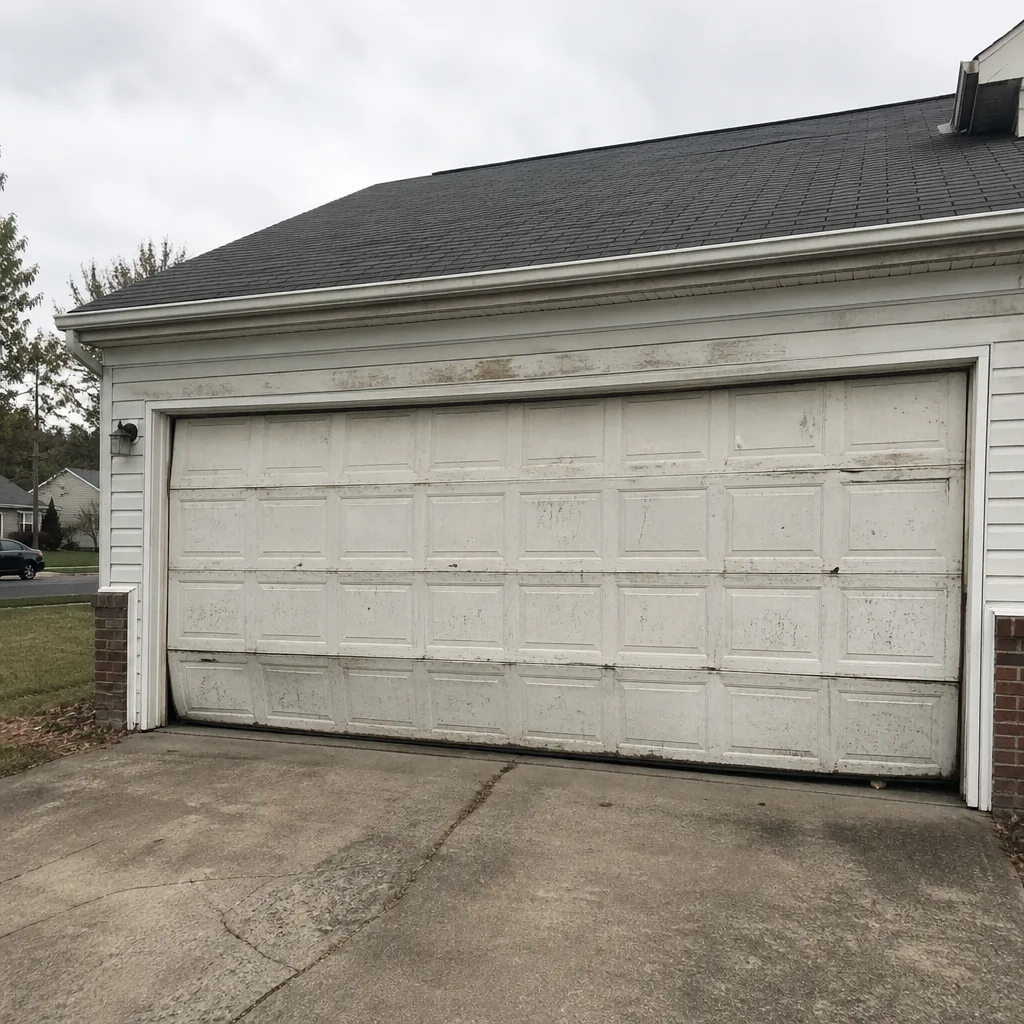 Before
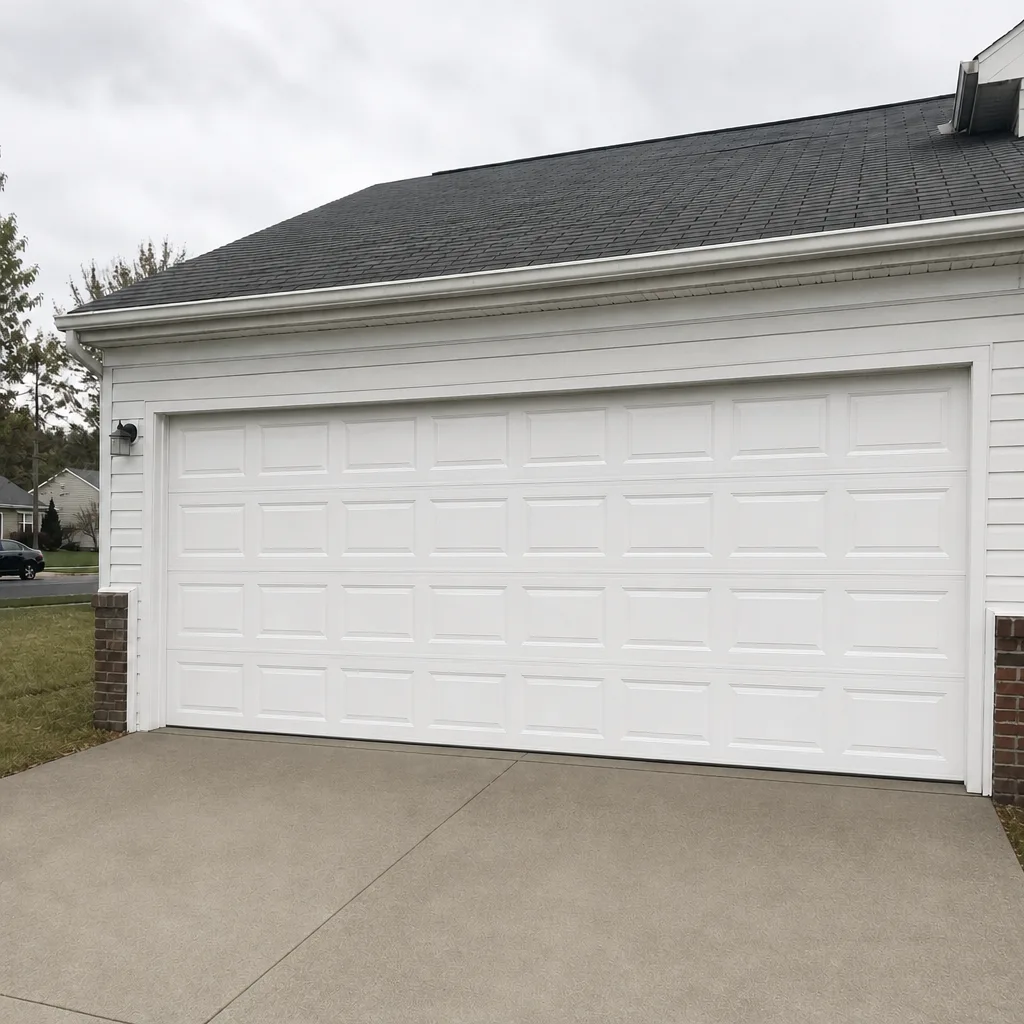 After
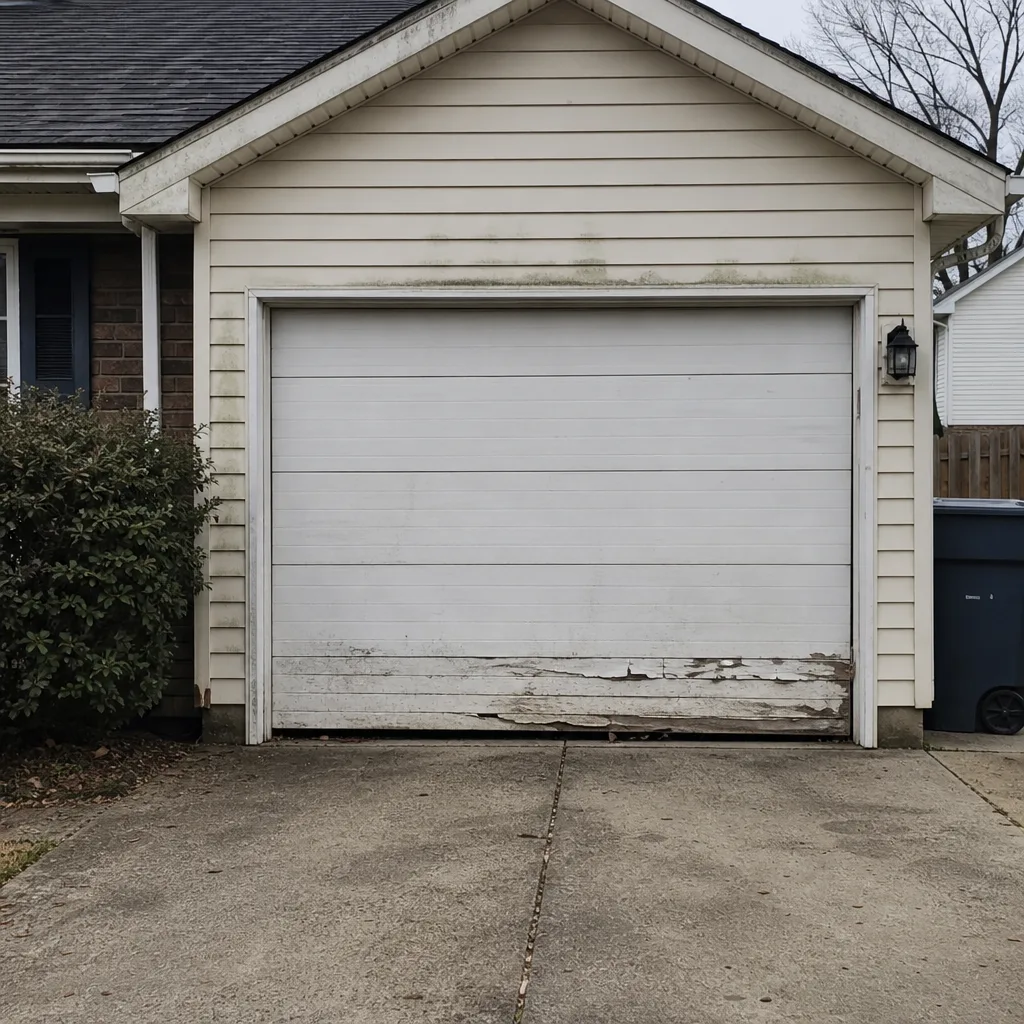 Before
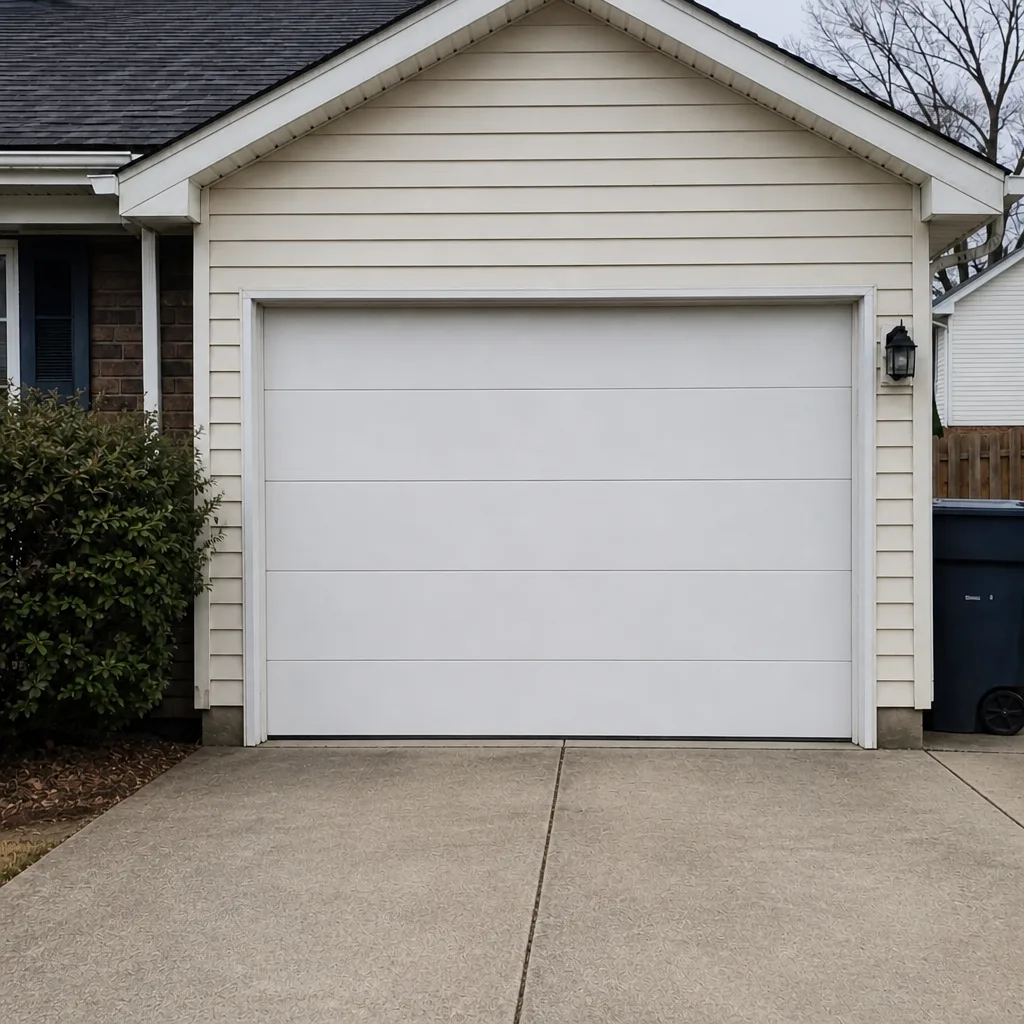 After
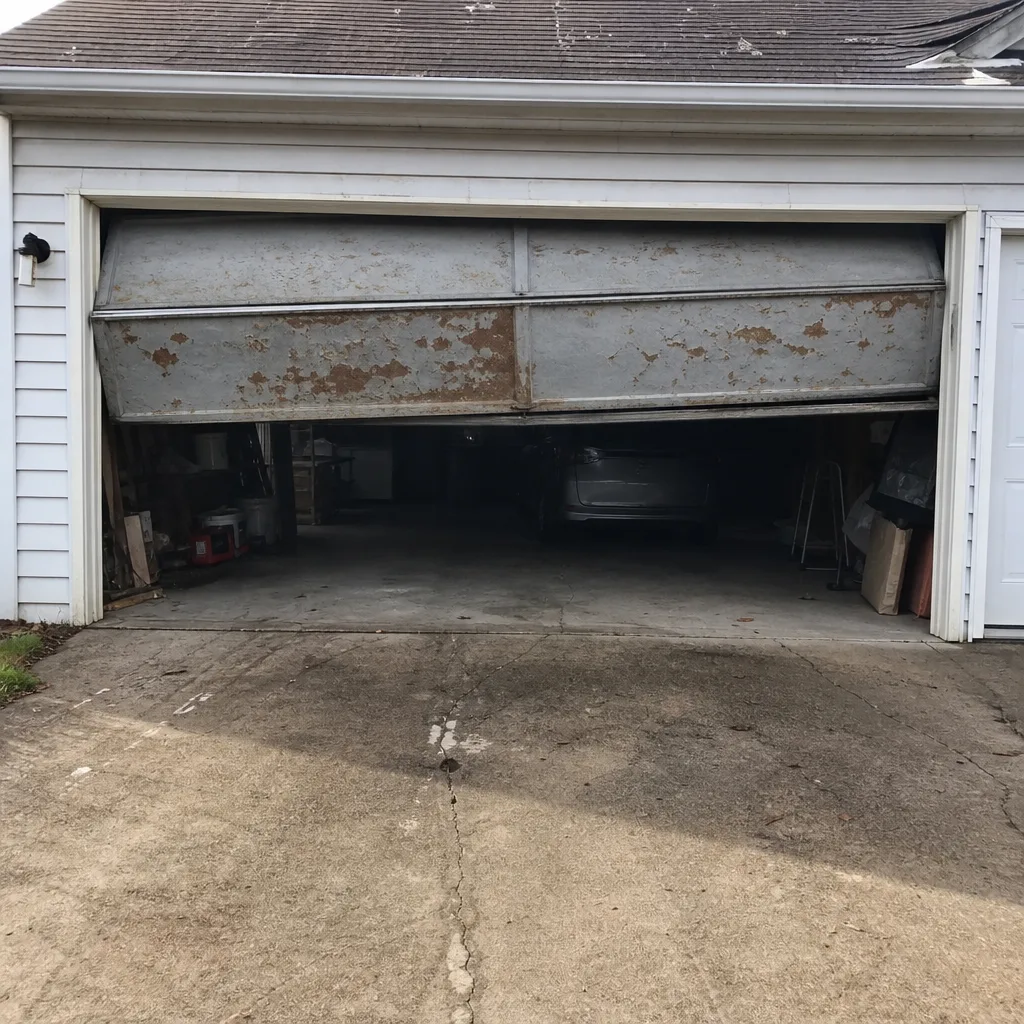 Before
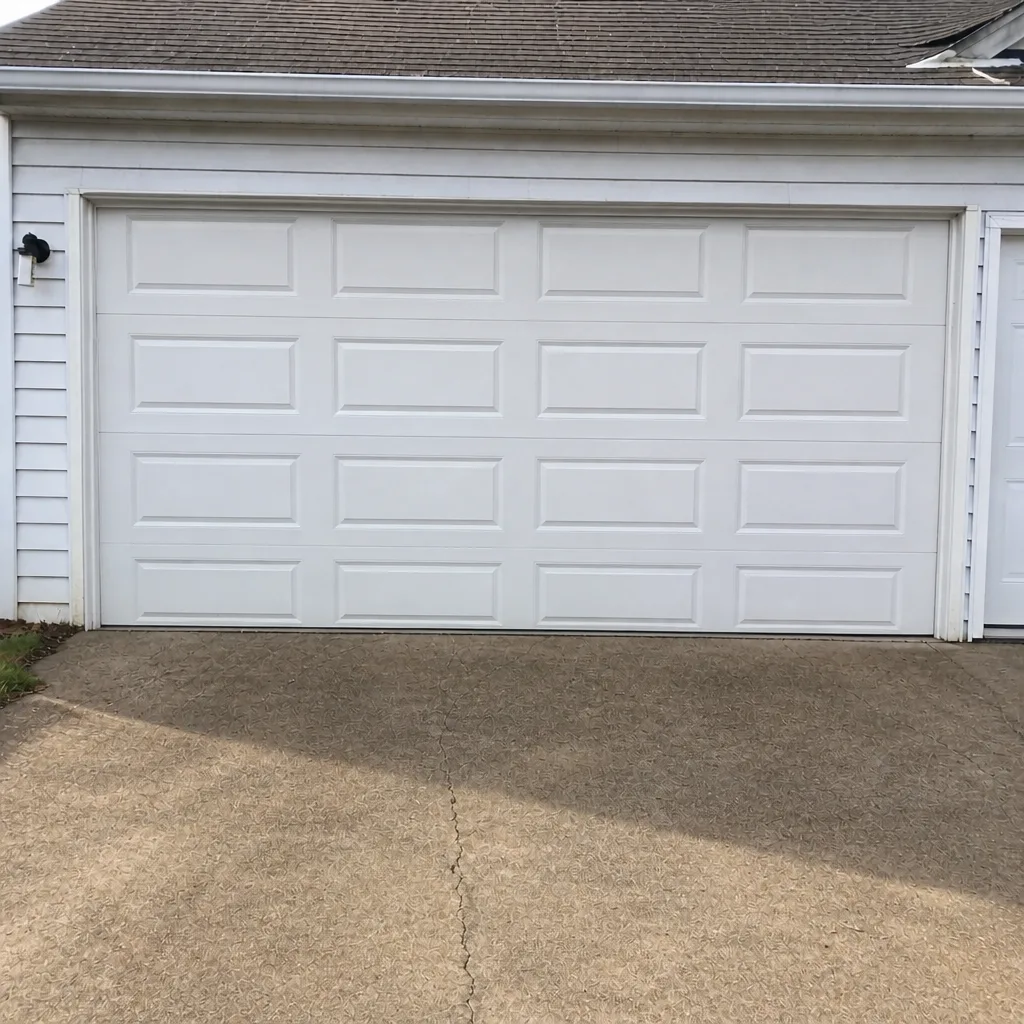 After
Frequently Asked Questions
The first sign is usually a change in sound or speed: the door gets noticeably louder or slower before it stops working. That’s the mechanism telling you it’s under more resistance. Don’t wait for the loud bang; call us for a free estimate at (866) 834-6826.
Most garage door repairs in Chesapeake run in the mid-hundreds for common problems, with the final price set by the written estimate. Spring replacement costs more because it’s a two-part job, and a matched pair of springs costs roughly twice a single spring. Call (866) 834-6826 for an exact quote; estimates are free and the price is agreed before work begins.
Yes, for urgent failures like a snapped spring, a dropped door, or a door stuck open or closed, we can often get a technician out the same day, and emergency service is available for situations that can’t wait for a next-day appointment. Call (866) 834-6826 early if you can, and we’ll get you on the schedule.
No. The written estimate sets the price, and we don’t start until you’ve agreed to it in writing. If we find something we didn’t expect, we’ll explain it to you and get your okay before anything changes, not after. Call (866) 834-6826 to book your estimate.
Yes. The local professional we connect you with is licensed and insured as their state requires, and technicians who handle high-tension springs and cables are trained specifically for that work. If you have questions about our service, call (866) 834-6826.
A snapped or hanging spring, a frayed or slack cable, a door hanging crooked or off its track, or a door that won’t stay up all mean stop using it now. Don’t run the opener and don’t try to fix it yourself. Call (866) 834-6826 and we’ll get someone out for an emergency evaluation.
The Bottom Line
Warning signs on a garage door arrive in order, and each step is easier and cheaper to handle than the one after it. The sound change comes before the failure, and the speed change comes before the sound. Learn to notice the early signs and you’ll mostly avoid the emergency step entirely. Run the balance test when the seasons change, do a quick visual check of the bottom corners for rust and cable fraying, and take the stop-using-the-door signs seriously with no debate. In Chesapeake, the humidity and temperature swings push these signs along steadily, so a small issue addressed on your schedule is worth more than a big one fixed on a Sunday. If you spot any of these signs and want a trained eye on it, call (866) 834-6826 for a free estimate. Our technicians have up to 13 years of experience and work on all the major brands, from a simple repair to a brand-new door.
Written by the team at Chesapeake Garage Door Repair Pros.